
Ben Gurion Airport Parking Lots Full Amid Record Passenger Traffic
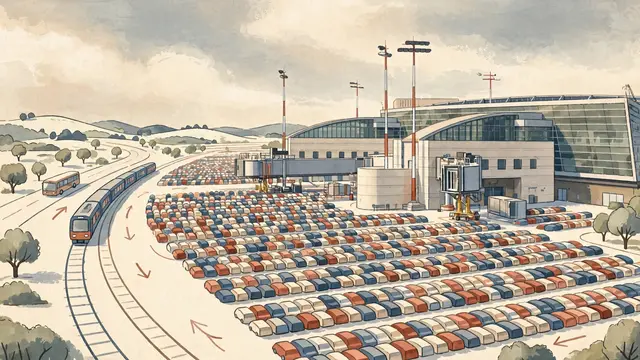
Ben Gurion Airport's parking facilities reached full capacity on Thursday afternoon, prompting the Israel Airports Authority to issue a notice advising travelers and those accompanying them to avoid arriving by private car and instead use public transportation. The announcement, which applied to both short-term and long-term parking lots, apologized for the inconvenience.
The surge in passenger traffic was anticipated, with the authority expecting approximately 1.13 million travelers between the end of Yom Kippur and October 4th, and over 90,000 passengers daily during the intermediate days of the Sukkot holiday. Last Thursday alone saw around 105,000 people and 614 flights.
This high volume of travelers is straining the airport's parking infrastructure, which offers about 20,000 spaces across 27 lots. Passenger numbers have significantly increased, with a 33% rise from 13.88 million in 2024 to 18.47 million in 2025. Parking revenue in 2025 reached approximately 148 million shekels, coinciding with a 35% increase in daily parking fees in June 2025 for lots near Terminal 3, raising the peak season rate from 100 to 135 shekels.
Even with various parking options ranging from 50 to 135 shekels per day, including covered and uncovered long-term lots and waiting areas, these facilities are filling up. Private parking lots outside the airport also exist, with comparable or higher costs and additional fees. The authority warns against unofficial parking services operating illegally.
A tender for operating the airport's parking facilities and central control room is underway, with a contract set to begin in January 2027. However, the tender documents do not indicate plans for expanding the parking capacity or a timeline for a new parking lot. The authority reiterates its recommendation to use public transportation, noting that driving and parking can sometimes be more expensive than a taxi to the airport.
Keep up with
The same event, reported separately by each outlet. Open a few to compare what different newsrooms emphasize — and what they leave out.





























Not the same event — other stories that share this one’s people, places, or theme: background, reactions, and follow-ups.