
Israel's Desalination Plants Resume Operations After Algae Crisis
Translated & summarized from Vesty by baba
Israel's desalination plants have resumed operations after a five-day shutdown caused by an algae bloom from the Nile Delta. The crisis led to water shortages affecting agriculture and livestock, with authorities working to restore full capacity.
The story in 5 lines · by baba
- Desalination plants are largely back online after a five-day algae-induced crisis.
- Algae from the Nile Delta region caused seawater cloudiness, threatening facilities.
- The crisis significantly impacted Israeli agriculture and livestock farms.
- Authorities increased water intake from the Sea of Galilee and artesian wells.
- Water supply disruptions and reduced pressure were reported in some areas.
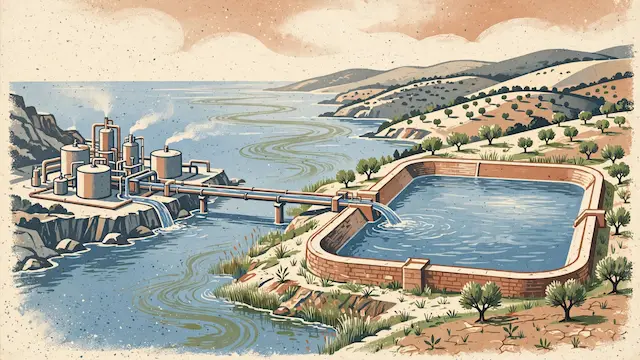
Israel's desalination plants are largely back online after a five-day crisis caused by a massive influx of algae that clouded seawater and threatened to contaminate the facilities. Energy and Infrastructure Minister Eli Cohen announced Wednesday, September 2, that the water facilities would return to full operation within hours. The algae, believed to have originated from the Nile Delta region, prompted the shutdown of most of the country's six major Mediterranean desalination plants starting August 29. "The cloudiness of the water is a consequence of the influx of algae," Cohen explained during a visit to the Sorek desalination complex. "To overcome this, we increased water intake from the Sea of Galilee and worked to increase the productivity of artesian wells." While two plants remained offline at the time of reporting, the majority had resumed operations. The crisis significantly impacted agriculture, with irrigation halted for vegetable plantations, greenhouses, and young saplings, particularly in the Ramat Negev region and the Nitzana Valley. Livestock farms also faced water shortages, requiring water tanker deliveries to kibbutz and moshav farms. The Ministry of Energy had additional water tankers on standby.
During the crisis, authorities instructed the public to reduce watering of green spaces and other non-essential water usage. The disruption began on August 29 with the onset of the algae migration, leading to the shutdown of five plants by August 30. Initial hopes for a restart on September 1 were dashed when the Sorek facilities had to be temporarily halted again after a few hours. Water supply disruptions and reduced pressure were reported in residential areas of Beersheba on September 1.
Mentioned
The same event, reported separately by each outlet. Open a few to compare what different newsrooms emphasize — and what they leave out.
Left 2Centre 8Right 4Haredi 2Other 7

























