Israel Halts Desalination Plants Amid Algal Bloom Crisis
Translated & summarized from Ynet by baba
Five of Israel's six Mediterranean desalination plants were shut down due to an algal bloom, likely from Egypt. While operations are resuming, the incident has sparked criticism and highlighted concerns about water management and future supply.
The story in 5 lines · by baba
- Five of six Israeli desalination plants shut down due to algae.
- Algae likely originated from Egypt, causing turbidity.
- Farmers in the south experienced water supply cuts.
- Energy Minister addressed the water supply crisis.
- Critics blame poor management and lack of foresight.
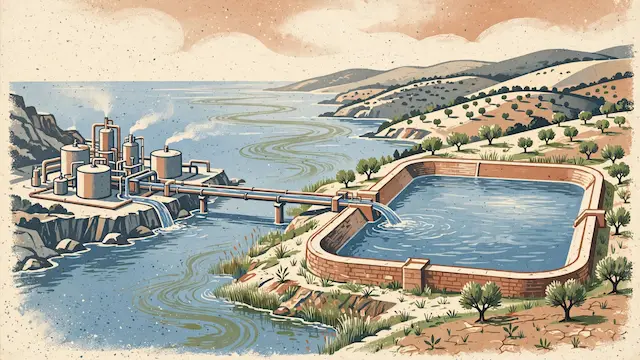
Five of Israel's six Mediterranean desalination plants were shut down this week due to turbidity, likely caused by algae originating from Egypt. While some facilities have since resumed operations, preventing a water shortage, farmers in the south had their water supply cut off yesterday. Energy and Infrastructure Minister Eli Cohen addressed the water supply situation on Wednesday.
The unprecedented event has drawn criticism towards Minister Cohen and water authority officials. A water sector source told Ynet that there was no prior warning or forecast for such a severe incident, adding that system managers are not operating optimally. The source emphasized that desalination plants should operate at maximum capacity, with Israel purchasing all water they can produce, while natural water sources like aquifers and the Sea of Galilee should serve as emergency reserves.
This source further explained that Israel is at the end of summer and its natural reservoirs were not full. Contrary to popular belief, desalinated water is cheaper than natural water when all associated costs, including environmental damage, are considered. The source advocated for expanding existing desalination facilities, noting that building new ones would take at least a decade. Israel needs a constant water surplus to handle future crises and population growth. The state and the Water Authority are reportedly prioritizing tenders for new plants over expanding current ones, a decision the source called a matter of policy and prioritization, as water is invaluable during a crisis.
The same event, reported separately by each outlet. Open a few to compare what different newsrooms emphasize — and what they leave out.
Left 2Centre 8Right 4Haredi 2Other 7