Water Supply Restored to Farmers Amid Warning of System Vulnerability
Translated & summarized from Mako by baba
Israel has restored water supply to southern farmers after an algae bloom threatened its desalination plants. Experts warn of system vulnerability, with pollution from Gaza potentially worsening the situation and highlighting the need for diversified water sources.
The story in 5 lines · by baba
- Water supply to southern farmers has been restored.
- Algae bloom threatened desalination plants, causing partial shutdown.
- Experts warn of Israel's vulnerability due to reliance on desalination.
- Pollution from Gaza may have worsened the algae bloom.
- Calls for diversifying water sources and addressing pollution.
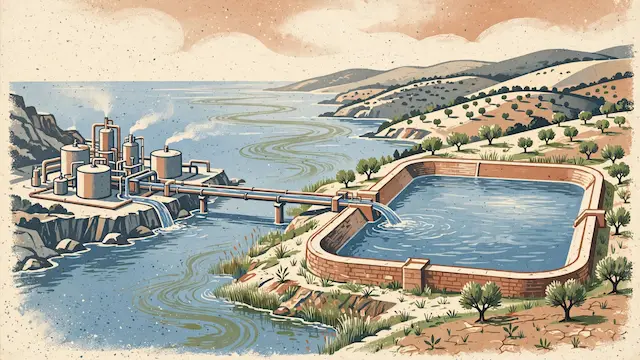
Israel has resumed water supply to farmers in the south following a disruption caused by an algae bloom that threatened desalination plants. The incident has raised concerns about the nation's preparedness for extreme water scarcity scenarios. Experts warn that Israel's water systems are vulnerable, with former Ministry of Environmental Protection Director General Galit Cohen highlighting the significant reliance on desalination, which accounts for 80% of urban water consumption.
Cohen suggested that sewage pollution from Gaza may have exacerbated the algae bloom, intensifying its impact on the desalination facilities. "The pollution from Gaza is spilling over to us," she stated, emphasizing the need to address the situation in Gaza for Israel's own benefit. The algae bloom, visible in satellite imagery as a gray-green band along the coast, posed a physical threat to the desalination plants, leading to their shutdown.
While the immediate crisis for farmers has been averted, the event underscores a broader vulnerability. The "Adam Teva V'Din" organization criticized the government's near-exclusive reliance on desalination, urging diversification of water sources and investment in groundwater and well restoration. They argue that billions spent on physical and cyber security for desalination plants overlook critical threats like marine pollution.
In response to the crisis, the Water Authority has authorized Mekorot to restart water flow to southern farmers, alleviating immediate concerns about crop damage. However, one desalination plant remains offline, while others operate at reduced capacity. The Water Authority assured the public that drinking water supplies are not at risk.
Mentioned
The same event, reported separately by each outlet. Open a few to compare what different newsrooms emphasize — and what they leave out.
Left 2Centre 8Right 4Haredi 2Other 7