
Desalination Plant Shutdown Threatens Israeli Agriculture Ahead of Holidays
Translated & summarized from Davar by baba
Israel is facing a critical water shortage in its agricultural sector due to the shutdown of several desalination plants. This has put crops and livestock at risk, threatening produce availability for the upcoming holidays and national food security. Emergency measures are in place, but a long-term solution is urgently needed.
The story in 5 lines · by baba
- Desalination plant failures cause severe water shortage for Israeli agriculture.
- Crops and livestock are at immediate risk, threatening holiday produce supply.
- Farmers face millions in losses, impacting national food security.
- Regions relying solely on desalination are most critically affected.
- Emergency water tankers provide temporary relief to affected farms.
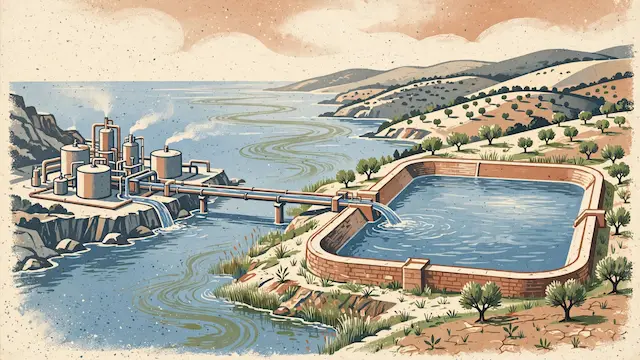
A widespread shutdown of Israel's desalination plants is causing a severe water shortage for agriculture, threatening the supply of fresh produce for the upcoming High Holidays. While partial water supply to the south resumed overnight, plants in Ashkelon, Ashdod, and Sorek A remain offline. Sorek B and Palmahim are operating at half capacity, with only the Hadera plant functioning normally.
The agricultural sector, particularly vegetable growers, is experiencing significant hardship. Rotem Yadlin, head of the Gazer Regional Council, warned that if water is not restored by the next day, the damage to farms will be irreversible. Estimates suggest hundreds of acres of greenhouses, vineyards awaiting harvest, and large dairy farms with hundreds of cows are at risk. Yadlin emphasized that the crisis impacts individual farmers with millions in losses and jeopardizes national food security.
In the Ramat Negev region, especially the Nitzana foothills, the water crisis is acute. These areas rely solely on desalination for irrigation, with no alternative sources. Oren Lavi, Director General of the Ministry of Agriculture, stated that prolonged irrigation cessation can cause irreparable damage to seedlings, greenhouses, and sensitive crops. The ministry is prioritizing farms with immediate threats to crops and livestock.
Farmers like Alon Shalev in Kadish-Barnea, near the Egyptian border, face devastating losses. Shalev, a tomato grower for 40 years, estimates a NIS 2.5 million loss if the shutdown continues, potentially leading to shortages for consumers during the holidays. The Nitzana region's sole water source is desalination, and limited, intermittent supply from Mekorot is insufficient.
Dairy farms are also in critical condition. Assaf Demlin of Moshav Matzliach reported no water for his farm since Tuesday morning, endangering 450 cows, including 300 milk producers. The low water pressure prevents troughs from filling, leaving cows distressed in the heat. Emergency measures, including water tankers, are being deployed, but are considered only a temporary solution. Demlin fears long-term damage to milk production and herd fertility.
Officials warn that if the crisis persists, water may need to be diverted from domestic use to agriculture. The Ministry of Agriculture is coordinating with the Water Authority and Mekorot to address the emergency, but a definitive timeline for resolving the desalination plant issues remains unclear. The situation highlights the vulnerability of Israel's food security to disruptions in its water infrastructure.
Mentioned
The same event, reported separately by each outlet. Open a few to compare what different newsrooms emphasize — and what they leave out.
Left 2Centre 8Right 4Haredi 2Other 7