Israel to Activate Two New Desalination Plants Amid Unprecedented Sea Turbidity
Translated & summarized from JDN by baba
Israel will activate two new desalination plants and increase water extraction from natural sources due to a rare natural event causing high seawater turbidity that halted most existing plants. This measure aims to ensure a stable water supply for residents, though it has reduced water for agriculture, raising concerns about crop damage and produce availability.
The story in 5 lines · by baba
- Two new desalination plants will be activated due to high seawater turbidity.
- Natural water sources will see increased extraction to compensate.
- Existing desalination plants suspended operations due to the phenomenon.
- Agricultural water supply is reduced, threatening crops.
- The situation is described as unprecedented in 20 years.
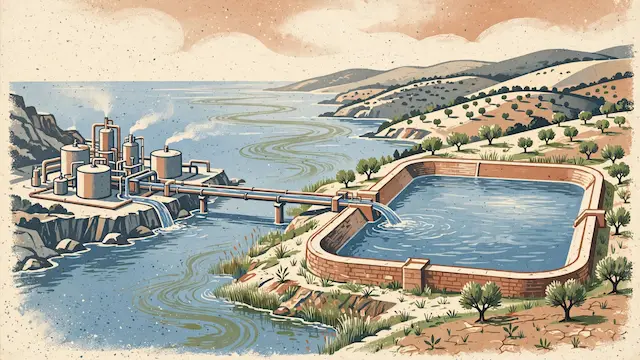
Israel is set to activate two additional desalination plants and increase water extraction from natural sources, including the Sea of Galilee and groundwater wells, to ensure a stable water supply for residents nationwide. The decision comes after a rare natural phenomenon caused unusually high turbidity in seawater, forcing most existing desalination facilities to suspend operations.
Energy and Infrastructure Minister Eli Cohen described the event as an "exceptional natural phenomenon not seen in two decades," which significantly increased seawater turbidity, preventing desalination processes. He reassured the public that Israel's water sector is prepared to manage the situation, emphasizing its resilience and commitment to uninterrupted supply.
To compensate for the reduced desalinated water output, the government will boost pumping from natural reservoirs. This measure, however, has led to a reduction in the supply of fresh water to agricultural farms and public landscaping systems. Some agricultural areas, particularly in the Negev and Nitzana, are experiencing severe distress due to the reduced irrigation, threatening young plants, greenhouses, and sensitive crops.
The Ministry of Agriculture has warned that prolonged water shortages could cause irreversible damage to crops, harm livestock, and disrupt the supply of fresh produce ahead of the High Holidays. Minister Cohen stated that experts are evaluating the possibility of gradually bringing more desalination plants back online to resume water flow to agriculture. Ministry of Energy staff, the Water Authority, and Mekorot company personnel are working around the clock to maintain supply continuity.
The same event, reported separately by each outlet. Open a few to compare what different newsrooms emphasize — and what they leave out.
Left 2Centre 8Right 4Haredi 2Other 7