
US and Israel Reportedly Plan Strikes on Iran Post-Midterm Elections
Translated & summarized from N12 by baba
The New York Times reported that the U.S. and Israel have developed plans for potential strikes against Iran following the U.S. midterm elections in November. These strikes could target Iran's nuclear and energy infrastructure. Meanwhile, Iran's oil reserves are depleted, increasing the impact of U.S. naval blockades. President Trump indicated imminent action, stating "something is going to be happening very soon."
The story in 5 lines · by baba
- U.S. and Israel reportedly planned strikes on Iran for November, after U.S. midterm elections.
- Potential strikes would target Iran's nuclear, energy, and missile infrastructure over three days.
- Iran's floating oil reserves are depleted, increasing the impact of U.S. naval blockades.
- President Trump stated "something is going to be happening very soon" regarding Iran.
- U.S. military is reducing its presence at Middle Eastern bases amid regional tensions.
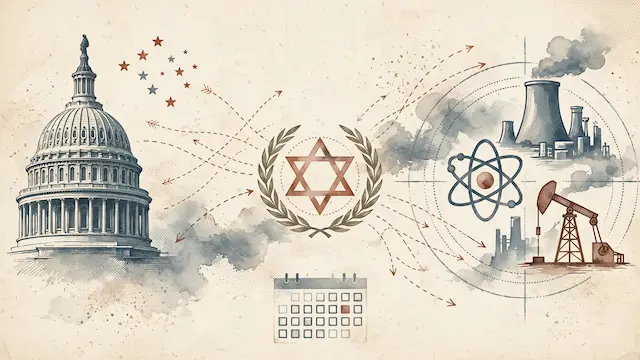
The New York Times reported that the U.S. military and the IDF have developed plans for renewed strikes against Iran, to commence after the U.S. midterm elections in November. These potential strikes, which could last up to three days, would target Iran's energy infrastructure, nuclear facilities, and missile and drone depots. U.S. officials familiar with the discussions confirmed the plans, which were reportedly discussed during a secret meeting between Prime Minister Benjamin Netanyahu and Secretary of Defense Pete Hegseth. A White House official stated that the administration does not comment on potential military plans but reiterated President Trump's commitment to preventing Iran from acquiring nuclear weapons.
Analysts suggest that further strikes could push Iran's economy towards collapse, potentially forcing diplomatic concessions. Concurrently, The Wall Street Journal reported that Iran's floating oil reserves have been depleted, meaning a naval blockade is expected to have a greater impact as Tehran can no longer sustain oil sales to China. This depletion of reserves, which had provided Iran with billions of dollars, occurred by mid-October due to the U.S. naval blockade preventing resupply to Chinese refineries.
Iranian sources indicated that they would retaliate by targeting data centers and underwater cables, rather than just ships and energy infrastructure. The U.S. military is set to complete its regional assessments in early November, involving aircraft carriers, Marines, fighter jets, and special forces. The shift to winter time in Iran, extending daylight hours, is also cited as a factor favoring the timing of potential strikes.
President Trump told reporters that the U.S. is not negotiating with Iran and that "something is going to be happening very soon," adding that most people expect it to occur after the elections. Earlier this month, the U.S. conveyed a message to Israel to increase readiness for possible action, though the specific reason for this alert remains unclear. Security officials in Israel are largely opposed to an immediate strike, fearing miscalculation could provoke an Iranian preemptive move. Intelligence agencies have not detected a return to uranium enrichment by Iran.
Amidst rising tensions, the U.S. military is reportedly reducing its presence at Middle Eastern bases, and the State Department is scaling back diplomatic staff in the region due to ongoing threats, including those from Iran. These troop movements include forces from Jordan, Qatar, and Kuwait, and the U.S. Embassy in Saudi Arabia will operate with an emergency team only. U.S. Central Command stated that forces are routinely repositioned to enhance readiness, without providing specific details for operational security reasons. No final decisions on a new operation in Iran have been made.
Mentioned
The same event, reported separately by each outlet. Open a few to compare what different newsrooms emphasize — and what they leave out.
Left 2Centre 8Right 5Haredi 2Arab 4Other 5































Not the same event — other stories that share this one’s people, places, or theme: background, reactions, and follow-ups.
