
US and Israel Plan Secret Strikes on Iran Post-Midterms
Translated & summarized from Now 14 by baba
The US and Israel have developed plans for potential strikes on Iran after the US midterm elections in November, targeting nuclear, missile, and energy sites. Iran has threatened unprecedented retaliation, including attacks on data centers and undersea cables. President Trump, who has the final say, has previously halted proposed strikes. The timing is influenced by the elections, military build-up, and operational conditions, while Iran prepares for a potentially wider conflict.
The story in 5 lines · by baba
- US and Israel are planning potential strikes on Iran after US midterm elections in November.
- Iran has threatened unprecedented retaliation, including targeting data centers and undersea internet cables.
- President Trump has the final decision on any strikes and has previously halted proposed attacks.
- The US is concentrating significant military forces in the region for the potential operation.
- Iran's response could include attacks on Saudi oil refineries to influence global energy prices.
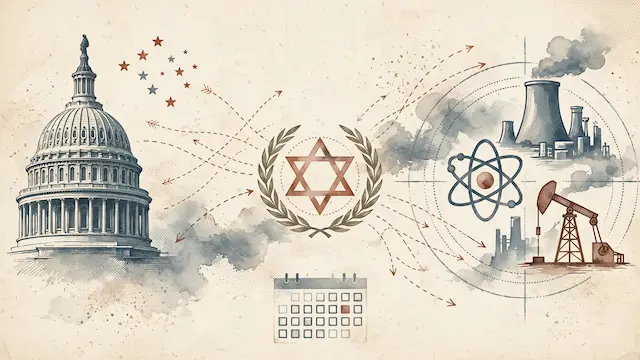
The United States and Israel have developed detailed operational plans for renewed strikes against Iran, to be potentially launched after the US midterm elections in early November, according to a New York Times report citing American officials. The plans focus on a short, intensive military operation targeting Iran's underground nuclear facilities, missile and drone depots, and energy infrastructure. The US is reportedly concentrating significant military forces in the region.
In response, Iran has warned that any further conflict would not be brief or limited, threatening to extend retaliatory attacks to data centers and undersea internet cables. The report indicates that the Israeli military (צה״ל) and the US military have intensified operational coordination and preparations in recent weeks, including joint flight exercises over Iraq. US Secretary of Defense Pete Hegeman met with Prime Minister Binyamin Netanyahu in Israel to discuss the possibility of renewed strikes.
Some US officials believe a concentrated three-day offensive could inflict severe economic damage, compelling Tehran to compromise in negotiations. However, this assessment is not universally held, and some in Washington doubt the effectiveness of further attacks. The final decision rests with US President Donald Trump, who has previously halted several proposed strikes. According to US and Israeli security sources, the two countries were close to a joint attack in early October, with military preparations largely complete and air forces on high alert, but Trump ultimately postponed the operation.
President Trump's shifting decisions have created daily uncertainty for military planners, who must maintain readiness without a clear timeline for action. The White House stated it does not comment on military plans but affirmed that Trump keeps all options open to prevent Iran from acquiring nuclear weapons. The timing after the midterms is influenced by Trump's commitment not to launch new attacks before the elections and by the expected completion of US force build-up in the region by early November, which includes aircraft carriers, Marines, and special forces. Improved nighttime conditions in November are also seen as advantageous for air operations.
One potential target is the "Mountainous" underground nuclear facility, known in Iran as "Kouh Kolang." While Trump has considered using the GBU-43/B "MOAB" bomb, experts caution it may not be effective against deep underground bunkers. Iran, meanwhile, is preparing for further conflict, with officials vowing a response beyond commercial ships and energy infrastructure, potentially targeting vital communication systems. Mehdi Mohammadi, a senior advisor, dismissed the US estimate of a three-day campaign as a "fantasy," asserting Iran would dictate the conflict's duration and intensity.
Iranian commentator Fayman Salahi suggested that attacking Saudi oil refineries, including Aramco facilities, could be a response to strikes on the "Mountainous" site, aiming to drive up global oil prices and pressure the Trump administration. US planners are reportedly wary of hitting Iranian oil infrastructure due to fears of exacerbating global fuel price hikes and inflation, as seen in previous escalations. Diplomatic efforts continue, with the US using the threat of attack as leverage for progress on Iran's nuclear program and Strait of Hormuz control, though Iran has been unwilling to make concessions on its nuclear activities. Dana Stroul noted that previous military actions, sanctions, and naval blockades have not compelled Iran back to meaningful negotiations.
Israeli elections on October 27th could also impact the timing, potentially complicating an offensive for a caretaker prime minister. Some analysts suggest the prospect of a joint US-Israeli operation might even encourage a unity government. Iranian leadership reportedly believes the US and Israel aim not just to curb the nuclear program but to overthrow the regime. The influence of the new Supreme Leader, Mojtaba Khamenei, remains unclear, with some intelligence suggesting hardliners in the Revolutionary Guards hold significant decision-making power. The US has also ordered non-essential personnel and families to leave Saudi Arabia due to ongoing Houthi attacks, highlighting regional escalation concerns.
Mentioned
The same event, reported separately by each outlet. Open a few to compare what different newsrooms emphasize — and what they leave out.
Left 1Centre 6Right 5Haredi 2Arab 3Other 2





















Not the same event — other stories that share this one’s people, places, or theme: background, reactions, and follow-ups.
