
US and Israel Plan Iran Strikes Post-US Midterms, NYT Reports
Translated & summarized from Behadrei Haredim by baba
The US and Israeli militaries have prepared plans for a potential three-day strike on Iran, targeting energy infrastructure and nuclear facilities, to be executed after the US midterm elections. Defense Secretary visited Israel to discuss the operation, while joint military exercises have intensified. President Trump, who has the final say, has previously vetoed strikes, and the administration wishes to avoid action before the elections due to potential economic impacts. Political considerations also affect Israeli Prime Minister Netanyahu's decision-making ahead of his own elections.
The story in 6 lines · by baba
- US and Israeli militaries have concrete plans for a three-day strike on Iran after US midterms.
- The operation targets Iranian energy infrastructure, nuclear facilities, and missile depots.
- US Defense Secretary visited Israel to discuss the potential strike with Prime Minister Netanyahu.
- President Trump has the final decision and has previously vetoed similar actions.
- Political considerations for both Netanyahu and Trump may influence the timing of any decision.
- Iran threatens to expand its targets and dismisses US strike plans as a "fantasy."
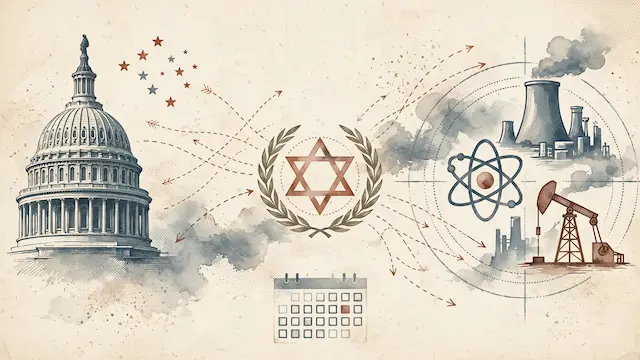
The United States and Israeli militaries have developed concrete plans for renewed strikes against Iran, which are expected to be carried out only after the US midterm elections, according to the New York Times, citing American officials and individuals familiar with the matter. The objective is a "short but intense" three-day operation targeting energy infrastructure, nuclear facilities, and missile and drone depots.
As part of the preparations, the US Secretary of Defense visited Israel this week and met with Prime Minister Benjamin Netanyahu to discuss the potential strike. Concurrently, both armies have intensified joint training exercises, including fighter jet flights over Iraq to practice attack maneuvers. Planners hope that severe damage to Iran's economy will compel it to agree to diplomatic concessions after eight months of conflict. However, the final decision rests with President Donald Trump, who has so far vetoed a resumption of hostilities. A planned strike was canceled at the last minute this month despite full readiness from both air forces. The administration prefers to avoid action before the elections, partly to prevent further surges in fuel prices and inflation. If an operation is approved, oil facilities are not expected to be among the targets. US forces, including three aircraft carriers and thousands of Marines, will be fully prepared by early November.
One key target being considered is the underground nuclear facility "Mount Qaraq," which Trump previously expressed interest in attacking with the "mother of all bombs." However, military experts caution that this weapon is unsuitable for penetrating granite rock, and its deployment from a slow transport aircraft would expose forces to Iranian air defenses. Political complexities also play a role on the Israeli side, with Prime Minister Netanyahu facing elections on October 27th. A loss could turn him into a caretaker prime minister struggling to initiate a war. Conversely, some analysts believe the threat of an attack could serve as a tool for him to form a broad emergency government.
Meanwhile, Iran shows no signs of backing down and refuses to discuss its nuclear program within the framework of negotiations over control of the Strait of Hormuz. Senior regime figures, led by Supreme Leader Mojtaba Khamenei, son of the assassinated Ali Khamenei, threaten to expand their attack targets beyond merchant ships to include server farms and underwater internet cables. A Tehran commentator suggested Iran plans to strike Saudi Arabian refineries to drive up energy prices if the "Mount Qaraq" site is attacked. The New York Times reported that the new Supreme Leader, Mojtaba Khamenei, remains an enigma to US and Israeli intelligence, with some sources suggesting he is not as strong as his father and that the Islamic Revolutionary Guard Corps makes key decisions.
Mehdi Mohammadi, a senior advisor to Iran's negotiator General Mohammad Bagher Ghalibaf, dismissed the idea of a 72-hour US strike as a "fantasy" on social media this week, stating Iran will determine when the war ends. He noted Trump's earlier prediction of a two-week war, adding, "Our attacks will be fiercer, more creative, and different. We are determined and confident, and strong planning has been launched."
Mentioned
The same event, reported separately by each outlet. Open a few to compare what different newsrooms emphasize — and what they leave out.
Left 2Centre 7Right 5Haredi 2Arab 3Other 2

























Not the same event — other stories that share this one’s people, places, or theme: background, reactions, and follow-ups.
