
National Security Council Warns of Terror Threats Against Israelis Abroad Ahead of Holidays
Translated & summarized from JDN by baba
Israel's National Security Council warned of heightened terror threats against Israelis and Jews globally due to Iran, Hezbollah, and Hamas, especially with the upcoming Jewish holidays. The council urged increased vigilance and advised against travel to several high-risk countries.
The story in 6 lines · by baba
- NSC warns of terror threats against Israelis abroad from Iran, Hezbollah, Hamas.
- Increased risk noted due to ongoing conflicts and online incitement.
- Third anniversary of Oct 7 attack may spur protests and terror efforts.
- Lone actor attacks are a growing, unpredictable threat.
- Specific countries designated as high-risk with travel advisories issued.
- Public advised to exercise caution and avoid displaying Israeli/Jewish symbols.
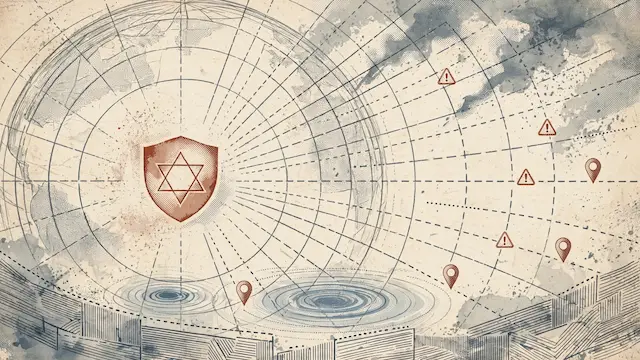
Israel's National Security Council (NSC) issued an updated threat assessment on Sunday, cautioning that Iran, Hezbollah, Hamas, and global jihad organizations are actively pursuing attacks against Israelis and Jews worldwide. The NSC emphasized that this assessment reflects current threat trends and does not include new travel advisories.
The ongoing conflict with Iran and its proxies has amplified the risk to Israelis abroad. Alongside increased attempts at attacks, there is a rise in anti-Israeli rhetoric and incitement online, motivating potential assailants. The NSC noted that the third anniversary of the October 7th Hamas attack, falling in October, could be a focal point for protests, some potentially violent, and for intensified terror group efforts.
Iran and its proxies are identified as the primary threat actors. Tehran seeks revenge for recent attacks and employs terror mechanisms, proxies, and even criminal organizations. Targets include diplomatic missions, senior Israeli officials, security personnel, Jewish community institutions, and ordinary Israeli citizens. Hezbollah remains a significant threat, especially after suffering heavy losses and the elimination of its leaders in the current conflict. Hamas is working to establish terror infrastructures in Europe and elsewhere for revenge attacks against Jews and Israelis, while also rebuilding its strength in Gaza and promoting attacks in the West Bank and Israel.
Global jihad groups like ISIS and Al-Qaeda continue to call for attacks on Jews, with threats particularly noted in Africa and Asia, but also aspirations for attacks in European capitals and the US, including lone-wolf operations. The Houthis are also calling for attacks on Israelis in Somalia and other African nations. The NSC highlighted a rise in attacks by lone actors, with 25 Israelis and Jews killed in terror attacks abroad since the start of the war. These attackers often target accessible, less-secured locations like mass gatherings, synagogues, and community centers.
The NSC advises increased vigilance around Chabad houses, kosher restaurants, and places of worship. Specific countries like Azerbaijan, Turkey, and the UAE are highlighted as vulnerable to Iranian terror infrastructure. Jordan, Qatar, Somaliland, and Egypt (including the Sinai Peninsula) have a Level 4 travel warning, advising complete avoidance. Travel through these countries is also discouraged, with strict rules if unavoidable. Entry is prohibited or restricted in Iraq, Yemen, Iran, Syria, Lebanon, Saudi Arabia, Bangladesh, Somalia, Pakistan, Afghanistan, Libya, and Algeria.
Recommendations for Israelis abroad include avoiding overt displays of Israeli or Jewish identity, minimizing Hebrew speech in public in high-risk areas, and refraining from real-time social media location sharing. It is also advised to downplay or remove any indication of military service. Travelers should stay away from protests and friction points, avoid political discussions with strangers, and keep local emergency numbers handy. In case of suspected threats, local security forces should be contacted first, followed by Israeli assistance hotlines.
Mentioned
The same event, reported separately by each outlet. Open a few to compare what different newsrooms emphasize — and what they leave out.
Centre 6Right 5Haredi 2Arab 4Other 4
























