Full coverage· Weather· Updated
Sea of Galilee Hits 100-Year Low Amid Severe Drought
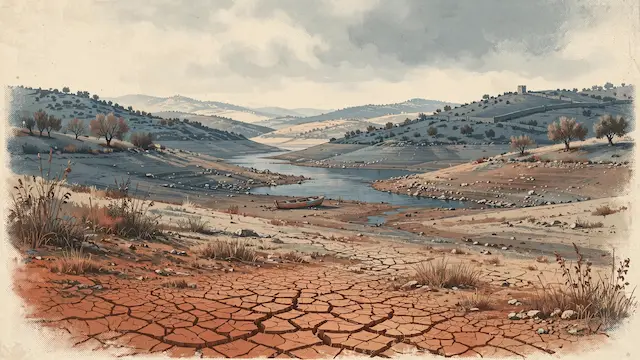
The Sea of Galilee has reached its lowest water volume in 100 years of measurements following two consecutive years of drought in northern Israel. According to a report by the Water Authority, the combined available water in the lake over the past two seasons was only 208 million cubic meters, with only 140 million to 142 million cubic meters accumulated in the 2025/26 season.
17 newsrooms · 3 languages · since




What happened
- 01The Sea of Galilee has reached its lowest available water volume in 100 years due to two consecutive drought seasons.
- 02Only 208 million cubic meters of water accumulated in the Sea of Galilee over the past two seasons combined.
- 03The Sea of Galilee basin received 90% of its average rainfall, while the Western Galilee received only 85%.
- 04By October 11, the Sea of Galilee's water level dropped to 213.655 meters below sea level, falling 65.5 centimeters below the lower red line.
- 05An algae bloom shut down Mediterranean desalination plants for six weeks, increasing reliance on natural water sources.
- 06Flow rates in northern rivers were significantly reduced, with the Jordan River measuring 80% of its long-term average.
- 07Southern Israel saw record flash floods, with the Tze'elim stream reaching an unprecedented peak flow of 570 cubic meters per second.
While national rainfall reached 95% of the long-term average, regional disparities were stark. The Sea of Galilee basin received only 90% of its average rainfall, and the Western Galilee received 85%. In contrast, the coastal and Yarkon-Taninim basins received about 100% of their average. The crisis was compounded by a six-week shutdown of Mediterranean desalination plants due to an algae bloom, which forced increased extraction from natural sources.
By early May, the Sea of Galilee's water level peaked at 212.51 meters below sea level, which is 3.71 meters below the upper red line and just 49 centimeters above the lower red line. By October 11, the level had dropped to 213.655 meters below sea level, falling 65.5 centimeters below the lower red line. Northern rivers and springs also saw reduced flows, with the Jordan River running at 80% of its average.
Conversely, southern and eastern Israel experienced unusual heavy rains and flash floods. On April 27, 2026, the Judean Desert and northeastern Negev received over 50 millimeters of rain in 90 minutes. This caused record flooding, with the Tze'elim stream reaching a peak flow of 570 cubic meters per second, the highest ever measured there.
Summarized by baba from the reports of 14 newsrooms. Updated
Latest report: Ice. Read Ice’s original
The coverage
17 newsrooms on this story
Who covered it
- Left1
- Centre5
- Right2
- Haredi1
- Arab1
- Other7+2










How it broke
How the headlines differ
Sea of Galilee Hits 100-Year Low Amid Severe Drought


