
Two Years of Drought Lead to Historic Lows in Sea of Galilee
Translated & summarized from Now 14 by baba
Two consecutive years of drought have caused the Sea of Galilee to reach its lowest water volume in a century, with only 90% of average rainfall in its basin. While the north suffered from low water levels, the south experienced record flash floods, including a peak flow of 570 cubic meters per second in the Tze'elim stream. Water Authority Director Yechiel Lipschitz noted the discrepancy between national rainfall and water source levels, stressing the need for flexible water management.
The story in 6 lines · by baba
- The Sea of Galilee has reached its lowest cumulative water volume in 100 years due to two years of drought.
- The Sea of Galilee basin received only 90% of its average rainfall, while the national average was 95%.
- The Sea of Galilee's water level is 3.71 meters below the upper red line.
- Southern Israel experienced record flash floods, with the Tze'elim stream seeing a peak flow of 570 cubic meters per second.
- Water Authority Director Yechiel Lipschitz highlighted the need for flexible water management.
- The Jordan River's flow rate was 80% of its long-term average.
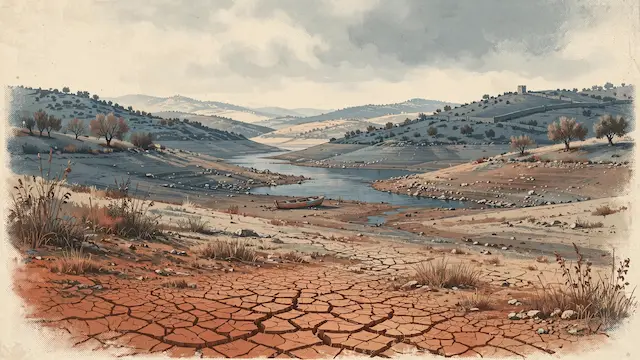
Two consecutive years of low rainfall in the Sea of Galilee's catchment area have resulted in the lowest cumulative available water volume recorded in 100 years of measurements, according to a new report by the Water Authority. While the national rainfall was approximately 95% of the average, the Sea of Galilee basin received only about 90%.
The impact of the past two dry seasons is particularly evident in northern water sources. The cumulative water volume in the Sea of Galilee since the start of the season reached only about 142 million cubic meters. The lake's water level peaked at 212.51 meters below sea level, which is 3.71 meters below the upper red line. Flow rates in northern streams also reflect the situation, with the Jordan River measuring about 80% of its long-term average.
In stark contrast, southern and eastern Israel experienced an unusual abundance of intense rain events and flash floods. During a significant event in April, the Tze'elim stream recorded a record flow rate of 570 cubic meters per second, the highest ever measured in that stream. The water level in the stream rose by approximately four meters in just half an hour, making this season particularly unusual for such events.
Water Authority Director Yechiel Lipschitz commented on the findings, stating that the past rainy season highlights the gap that can exist between national rainfall data and the actual state of water sources. He emphasized that even when rainfall approaches average levels, water sources continue to bear the impact of the previous drought year, underscoring the importance of flexible water resource management in Israel.
The same event, reported separately by each outlet. Open a few to compare what different newsrooms emphasize — and what they leave out.
Centre 4Right 2Haredi 1Other 1








Not the same event — other stories that share this one’s people, places, or theme: background, reactions, and follow-ups.


