
Israel's Natural Water Reserves Hit Record Low Amid Drought
Translated & summarized from Calcalist by baba
Israel's natural water reserves have reached a 100-year low due to a severe two-year drought, particularly affecting the north and the Sea of Galilee. While the 2025/26 rainy season saw near-average national rainfall, the cumulative effect of the drought has depleted reserves. Conversely, the south experienced unusual flooding, with record flow rates in the Tsalim stream. Water officials stress the need for ongoing management and planning amidst climate change impacts.
The story in 6 lines · by baba
- Israel's natural water reserves hit a 100-year low due to a two-year drought.
- The Sea of Galilee basin received only 90% of its average rainfall in the 2025/26 season.
- The 2024/25 and 2025/26 seasons combined yielded the lowest water volume in 100 years.
- Southern Israel experienced unusual heavy floods, with record flow in the Tsalim stream.
- Water Authority Director Yechiel Lipschitz highlighted the impact of past droughts and climate change.
- Israel faces very high water stress, with a score of 4.94 out of 5.
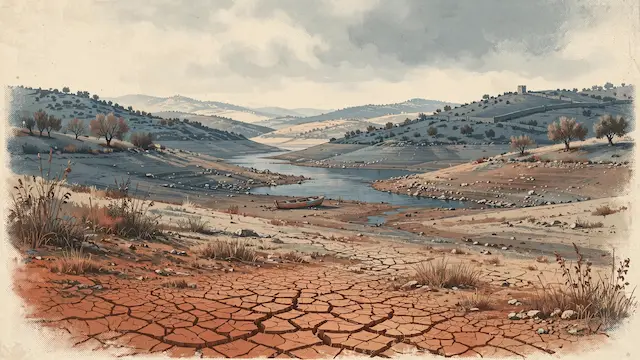
Israel's natural water reserves have reached their lowest point in 100 years of measurement, primarily due to a severe two-year drought impacting the north of the country. The 2025/26 rainy season saw national rainfall at approximately 95% of the multi-year average, with the Sea of Galilee basin receiving about 90% and the Western Galilee only 85%. This followed a particularly dry 2024/25 season, resulting in a combined water volume of only 208 million cubic meters over the two seasons, the lowest recorded.
Water authorities increased pumping from the Sea of Galilee and the coastal aquifer in September to compensate for reduced desalination plant use due to an algae crisis. Despite the national average rainfall being near normal in 2025/26, the deficit from the previous drought year continues to affect natural water sources, especially in the north and the Sea of Galilee basin. The Sea of Galilee's water level began the hydrological year at 213.08 meters below sea level, reaching a seasonal low of 213.45 meters in December before rising to 212.51 meters below sea level by early May, still 3.71 meters below the upper red line.
In contrast, the southern and eastern parts of Israel experienced an unusual number of intense floods during the same period. A flood event in the Judean Desert and northeastern Negev on April 27, 2026, saw over 50mm of rain in about 1.5 hours, with a peak flow of 570 cubic meters per second recorded in the Tsalim stream, the highest since measurements began and estimated to have a return period of over 50 years. This season was marked by a significant number of such flood events in the south and east.
Water Authority Director Yechiel Lipschitz stated that the recent rainy season highlights the gap between national rainfall data and the actual state of water sources, emphasizing the lingering impact of the previous drought year. He also noted the exceptional flood events in the south, underscoring the need for continuous monitoring, forecasting, long-term planning, and flexible water resource management.
Israel faces very high water stress, with a basic water stress score of approximately 4.94 out of 5, indicating a high ratio of water withdrawal to available supply. While desalination and water reuse reduce risks to urban supply, they do not eliminate pressure on natural sources, agriculture, and streams. Climate change is exacerbating the risks and severity of dry periods, with the Eastern Mediterranean experiencing severe drought in 2025.
Mentioned
The same event, reported separately by each outlet. Open a few to compare what different newsrooms emphasize — and what they leave out.
Centre 4Right 2Haredi 1Other 1








Not the same event — other stories that share this one’s people, places, or theme: background, reactions, and follow-ups.

