
Israel Faces Lowest Water Levels in Over a Century
Translated & summarized from Mako by baba
Israel's Water Authority has warned of the lowest water levels in over 100 years, primarily impacting the Sea of Galilee due to two consecutive drought years. Despite national rainfall reaching 95% of average, northern regions like the Sea of Galilee basin received only 90%. The Sea of Galilee's water level remains significantly below its upper red line, and northern rivers and springs show reduced flows, while southern areas experienced unusual floods.
The story in 6 lines · by baba
- Israel faces its lowest water levels in over 100 years, impacting the Sea of Galilee.
- Two consecutive drought years have led to a historic low in available water resources.
- National rainfall reached 95% of average, but northern regions received less.
- The Sea of Galilee's water level is 3.71 meters below its upper red line.
- Northern rivers and springs show significantly reduced flows.
- Southern Israel experienced unusual floods and record flows in Nahal Tsalim.
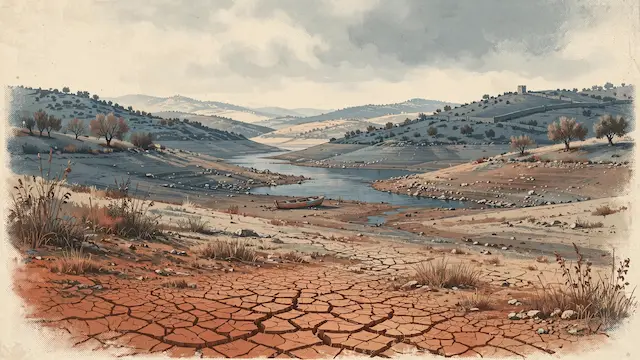
Israel is experiencing its lowest water levels in over 100 years, primarily affecting the Sea of Galilee and northern water sources, according to the Water Authority. Two consecutive years of drought have led to a historic low in available water, despite national rainfall reaching 95% of the average in the most recent season.
The cumulative volume of water in the Sea of Galilee over the past two years is approximately 208 million cubic meters, the lowest figure recorded in a century. While national rainfall was near average, the Sea of Galilee basin received only 90% of its average, and the Western Galilee received just 85%. In contrast, coastal basins received about 100% of their average rainfall.
The Water Authority emphasized that even with improved rainfall this year, the severe deficit from the previous season continues to impact natural water sources. The Sea of Galilee's water level reflects this shortage, reaching a seasonal peak of 212.51 meters below sea level in early May, still 3.71 meters below the upper red line.
Flows in northern rivers and springs are also significantly reduced. For instance, the Jordan River at theפקק Bridge station recorded a flow of 11.4 cubic meters per second in late April, about 80% of the average for this period. Other springs like Dan, Banias, and Taninim are also experiencing reduced flows, ranging from 80% to 94% of their averages.
Conversely, southern regions experienced unusual floods and record-breaking flows in Nahal Tsalim, reaching levels not seen in decades.
Mentioned
The same event, reported separately by each outlet. Open a few to compare what different newsrooms emphasize — and what they leave out.
Centre 4Right 2Haredi 1Other 3










Not the same event — other stories that share this one’s people, places, or theme: background, reactions, and follow-ups.

