
Israel's Sea of Galilee Hits Century Low Amid Regional Drought
Translated & summarized from Channel 9 by baba
Israel's Sea of Galilee has reached a historic low, with water inflows in the 2024/25 and 2025/26 seasons being the lowest in 100 years. Despite near-normal national rainfall in 2025/26, northern regions, including the Sea of Galilee basin, experienced deficits, leaving natural sources depleted. In contrast, southern Israel saw rare, intense flash floods. The situation highlights the ongoing need for natural water reserves, even with advanced desalination, and the importance of regional water management.
The story in 6 lines · by baba
- The Sea of Galilee recorded its lowest water inflow in 100 years due to two consecutive dry seasons.
- The 2024/25 and 2025/26 rainy seasons combined brought only 208 million cubic meters to the Sea of Galilee.
- Despite near-normal national rainfall in 2025/26, northern Israel experienced regional deficits.
- The Sea of Galilee's water level is dangerously close to its lower red line, falling below it by October 11.
- Southern Israel experienced rare, intense flash floods with rainfall intensity estimated to occur once every 100 years.
- The Water Authority head stressed that natural reserves remain crucial despite desalination advancements.
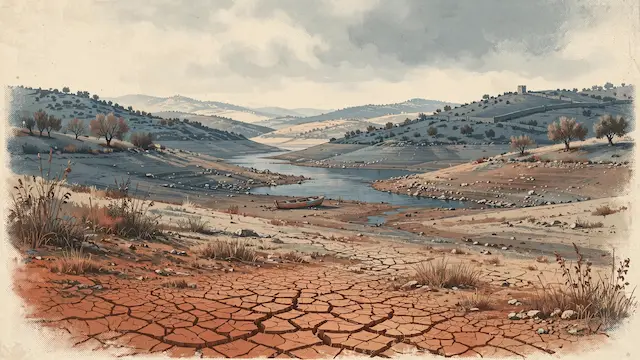
Two consecutive seasons of low rainfall in northern Israel have resulted in the lowest water volume entering the Sea of Galilee in 100 years, according to a new report by the Water Authority. The combined inflow for the 2024/25 and 2025/26 rainy seasons was approximately 208 million cubic meters, marking a historic deficit. While the country as a whole received about 95% of the average rainfall in the 2025/26 season, significant regional disparities exist. The Sea of Galilee basin received only 90% of its normal rainfall, and the Western Galilee received just 85%. This shortfall, following a dry previous year, means natural water sources in the north remain depleted despite near-normal national precipitation.
The Sea of Galilee's water level rose less than a meter over the winter, reaching 212.51 meters below sea level by early May. However, it remained 3.71 meters below its maximum allowable level and only 49 centimeters above its lower red line. By October 11, the lake's level had dropped to 213.655 meters below sea level, falling 65.5 centimeters below the lower red line.
Northern rivers and springs are also experiencing reduced flow. In late April, the Jordan River's flow was 11.4 cubic meters per second, about 80% of the long-term average for that time of year. The Dan spring flowed at 7.6 cubic meters per second (94% of normal), and Banias at 2.7 cubic meters per second (90% of normal).
In stark contrast, southern and eastern Israel experienced unusually heavy rains and flash floods. On April 27, 2026, areas in the Judean Desert and northeastern Negev received over 50 millimeters of rain in about 1.5 hours, a rainfall intensity with a return period of at least 100 years. Nahal Tzeelim experienced a peak flow of 570 cubic meters per second, the highest recorded, with water levels rising four meters in half an hour. The Dead Sea's water level dropped by 18 centimeters during this period, a slower decline than the 63 centimeters recorded the previous year, though the long-term trend of resource reduction persists.
The low inflow into the Sea of Galilee is particularly concerning given recent issues with desalination plants, which had to be suspended or reduced in September 2026 due to turbid water from the Egyptian coast. This highlighted the continued importance of natural water sources as a reserve. Yechiel Lifshitz, head of the Water Authority, emphasized that near-normal rainfall does not automatically replenish reserves, stressing the need for continuous monitoring and flexible water management. The report concludes that while the 2025/26 rainy season improved the situation compared to the previous drought, it did not eliminate the accumulated deficit, underscoring that national average rainfall figures do not reflect regional water availability.
Mentioned
The same event, reported separately by each outlet. Open a few to compare what different newsrooms emphasize — and what they leave out.
Centre 5Right 2Haredi 1Arab 1Other 6















Not the same event — other stories that share this one’s people, places, or theme: background, reactions, and follow-ups.

