
Israel Faces 100-Year Low in Water Reserves Despite Average Rainfall
Translated & summarized from Maariv by baba
Israel's water reserves have hit a 100-year low, particularly impacting the Sea of Galilee basin despite national rainfall reaching 95% of average. Two years of drought have led to reduced flow in rivers and springs across the country. Conversely, southern and eastern Israel experienced significant flash floods during the recent rainy season. The Water Authority reported these findings, highlighting the ongoing water challenges.
The story in 5 lines · by baba
- Israel's water reserves have reached a 100-year low, primarily affecting the Sea of Galilee.
- National rainfall for the 2025-2026 season was 95% of the long-term average.
- The Sea of Galilee basin received only 90% of its average rainfall.
- Flow rates in major rivers and springs are significantly below average.
- Southern and eastern Israel experienced unusual heavy rainfall and flash floods.
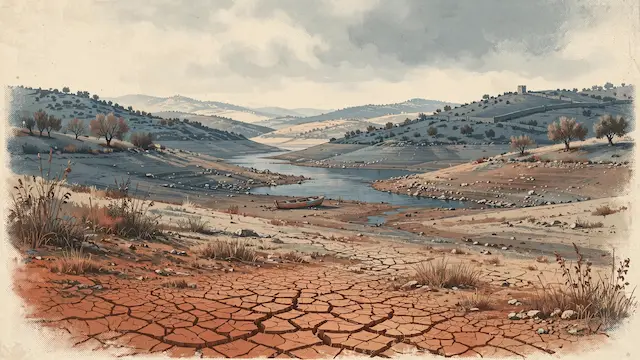
Israel is experiencing its lowest water reserve levels in a century, primarily due to two consecutive years of drought affecting the Sea of Galilee basin. While national rainfall for the October 2025 to April 2026 season reached 95% of the long-term average, the Sea of Galilee received only about 90% of its average, leading to a significant deficit. Other regions, like the Coastal Plain and Yarkon-Taninim basins, saw rainfall at about 100% of average, while the Western Galilee received around 85%.
The drought's impact is also evident in reduced flow rates in rivers and springs. By the end of April, the Jordan River's flow at the Jisr al-Ghazali station was 11.4 cubic meters per second, approximately 80% of the average. The Dan spring flowed at 7.6 cubic meters per second (94% of average), and the Banias spring at 2.7 cubic meters per second (90% of average). The Taninim springs had a flow of 0.64 cubic meters per second, about 80% of average.
In contrast, southern and eastern Israel experienced unusually heavy rainfall and flash floods. A notable event on April 27, 2026, in the Judean Desert and northeastern Negev saw over 50 millimeters of rain fall in approximately 1.5 hours in the event's core.
Mentioned
The same event, reported separately by each outlet. Open a few to compare what different newsrooms emphasize — and what they leave out.
Centre 5Right 2Haredi 1Arab 1Other 6















Not the same event — other stories that share this one’s people, places, or theme: background, reactions, and follow-ups.

