
Invasive Ant Species, Among World's Worst, Found in Haifa
Translated & summarized from Cursorinfo by baba
An invasive species of African big-headed ant, listed among the world's 100 most harmful, has been discovered in Haifa, Israel. The ant poses a significant ecological threat, capable of displacing native insects and damaging agriculture. Experts are urgently searching for and testing eradication methods, collaborating with multiple organizations to contain the spread. Residents are asked to report sightings and avoid moving potentially infested materials.
The story in 5 lines · by baba
- An invasive African big-headed ant species, among the world's 100 most harmful, has been found in Haifa, Israel.
- The ant poses a significant ecological threat, capable of displacing native species and damaging agriculture.
- Experts are urgently searching for additional colonies and testing eradication methods in Haifa.
- The Ministry of Environmental Protection is collaborating with multiple organizations to contain the spread.
- Residents are asked to report sightings and avoid moving potentially infested materials.
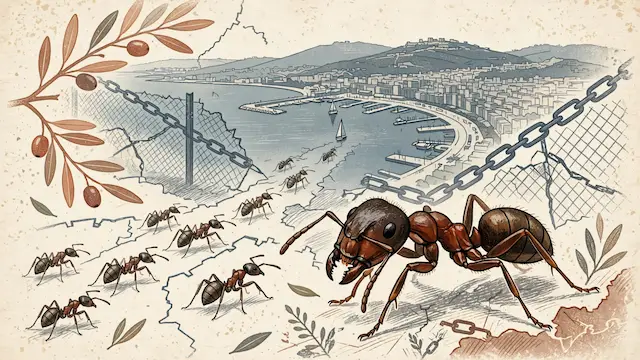
A new invasive ant species, identified as the African big-headed ant (Pheidole megacephala) and listed among the world's 100 most harmful alien species, has been confirmed in Haifa's Neve Sha'anan neighborhood. The discovery was announced by the Ministry of Environmental Protection on October 29. This ant poses a significant threat to the local environment and agriculture due to its rapid spread, ability to displace native insect populations, and potential to cause substantial damage to crops. Experts are actively searching for additional colonies.
The primary concern with this ant is not its danger to humans, but its ecological impact. These ants can establish vast colonies, disrupt natural balances, and outcompete local species. Dr. Shai Reichler, head of the Ministry of Environmental Protection's pest control department, stressed the urgency of immediate action, stating that combating invasive insects is most effective before they become established.
Initial findings place the ants mainly around Givat HaShavshevet and adjacent streets in Neve Sha'anan, with ongoing checks for potential sightings in the Hadar area. Trials of eradication methods have commenced in Haifa, with four infested sites each testing a different insecticide. Weekly assessments will determine the most effective agent for local climatic conditions.
This effort involves a collaboration between the Haifa Municipality, the Israel Nature and Parks Authority, Tel Aviv University, and the Ministry of Environmental Protection. The goal is to map the full extent of the infestation and prevent further spread beyond the identified zones in Haifa.
The African big-headed ant is recognizable by its distinctive physical traits, including disproportionately large heads on some individuals, measuring up to a third of their body length. These brown ants, typically two to three millimeters long, move in large groups, forming dense trails. While some local ant species share similar characteristics, definitive identification requires professional assessment. Their ability to form extensive, interconnected nest networks with multiple queens facilitates rapid population growth.
Beyond displacing native invertebrates and harming small vertebrates like nestlings and reptiles, these ants pose a threat to agriculture by protecting aphids from their natural predators, thereby encouraging aphid proliferation and plant damage. The Ministry of Environmental Protection is urging residents to assist by reporting suspected sightings with photos and precise locations. They also advise against transporting soil, potted plants, seedlings, or pruned branches from affected areas to prevent accidental spread.
Mentioned
The same event, reported separately by each outlet. Open a few to compare what different newsrooms emphasize — and what they leave out.
Left 1Centre 6Right 3Haredi 2Arab 2Other 5

















