
Dangerous African Ant Species Discovered for First Time in Israel
Translated & summarized from Vesty by baba
The African big-headed ant, one of the world's most dangerous invasive species, has been detected for the first time in Israel, specifically in Haifa. While not dangerous to humans, the ant poses a significant threat to local ecosystems and agriculture by displacing native species and harming crops. Authorities are working with multiple organizations to monitor and control its spread, urging residents to report sightings and avoid moving potentially contaminated materials.
The story in 5 lines · by baba
- The African big-headed ant, a dangerous invasive species, has been discovered for the first time in Haifa, Israel.
- The ant poses a significant threat to Israeli ecosystems and agriculture, but not to human health.
- The Ministry of Environmental Protection is collaborating with local authorities and universities to monitor and control the ant.
- Residents are asked to report sightings and avoid moving soil, plants, and garden waste to prevent further spread.
- The ant is native to Africa and spreads through contaminated plant materials and soil.
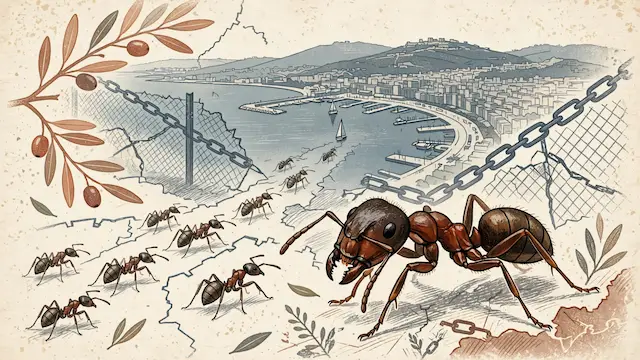
Israel's Ministry of Environmental Protection announced on Thursday, October 29, the first detection of the African big-headed ant (Pheidole megacephala) within the country. The invasive species, considered one of the world's most dangerous, was identified in the Neve Sha'anan neighborhood of Haifa. Authorities are investigating reports of its presence in other parts of the city and are urging residents to report any suspicious sightings to help map its spread and prevent further dissemination.
The ministry is collaborating with the Haifa Municipality, the Israel Nature and Parks Authority, and Tel Aviv University to enhance monitoring efforts and develop control methods suitable for Israeli conditions. Dr. Shai Reicher, head of the ministry's pest control department, emphasized the need for swift action to contain the ant before it establishes itself nationwide. "Although the African big-headed ant does not pose a threat to human health, it can cause significant damage to ecosystems and agriculture," he stated, stressing the importance of early detection and tailored control strategies.
Native to Africa, this ant has spread globally, particularly in warmer climates. It is named for its soldier ants, which have disproportionately large heads. Colonies reproduce rapidly, often featuring multiple queens and interconnected nests. The ants feed on insects, seeds, and organic matter and can spread through contaminated plant pots, seedlings, soil, and plant waste, similar to the invasive little fire ant.
Experts warn that the ant's establishment in Israel could severely disrupt local ecosystems by displacing native species, reducing arthropod diversity, and harming snails and slugs. They also prey on small vertebrates, including bird hatchlings, shrews, and reptiles, potentially causing cascading ecological effects and disrupting seed dispersal. In agriculture, the ants protect aphid colonies, exacerbating crop damage. Their spread could also impact infrastructure.
The Ministry of Environmental Protection advises that signs of infestation include numerous fast-moving ants forming dense trails, and the presence of both small workers and ants with disproportionately large heads. The ants are brown, with lighter midsections and darker front and rear parts, measuring 2-3 mm, twice the size of the little fire ant. While local ant species may share some characteristics, professional identification is necessary. Residents, especially in Haifa, are asked to send photos and locations of suspected ants to the provided email address and to avoid transporting soil, pots, seedlings, or garden waste from potentially infested areas.
Mentioned
The same event, reported separately by each outlet. Open a few to compare what different newsrooms emphasize — and what they leave out.
Left 1Centre 6Right 3Haredi 2Arab 2Other 5

















