
Invasive African Ant Species, Among World's Most Harmful, Discovered in Israel
Translated & summarized from Arutz Sheva by baba
Israel's Ministry of Environmental Protection confirmed the first discovery of the African big-headed ant, one of the world's most harmful invasive species, in Haifa. Authorities are conducting monitoring and pest control operations to prevent its spread, which could significantly damage local ecosystems and agriculture. A trial is underway to test the effectiveness of different pesticides against the ant.
The story in 5 lines · by baba
- The African big-headed ant, a top-100 invasive species, has been discovered for the first time in Israel.
- The ant was identified in Haifa's Neve Sha'anan neighborhood, with investigations ongoing in Hadar.
- The Ministry of Environmental Protection is leading efforts to monitor and control the ant's spread.
- The invasive species poses a significant threat to Israel's nature, agriculture, and infrastructure.
- A trial is underway to test the efficacy of various pesticide treatments against the ant.
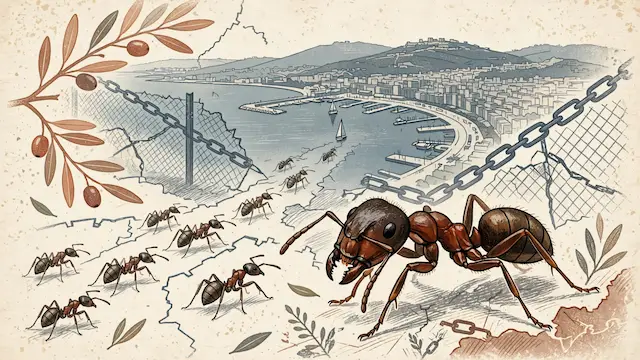
Israel's Ministry of Environmental Protection has announced the first detection in the country of the African big-headed ant, a species considered one of the world's 100 most damaging invasive species. The ant was identified in the Neve Sha'anan neighborhood of Haifa, with authorities also investigating reports from the Hadar neighborhood. The ministry, in collaboration with the Haifa Municipality, the Israel Nature and Parks Authority, and Tel Aviv University, has launched monitoring and pest control operations to prevent the ant's spread.
The discovery followed reports from residents, primarily in the Givat HaShevaet area and nearby streets in Neve Sha'anan. While the ant poses no direct health risk to humans, its establishment in Israel could significantly harm nature, agriculture, and infrastructure. Originally from Africa, the ant has spread globally, particularly in warm climates. Its name derives from the large heads of its soldier ants, and it is known for its rapid reproduction and ability to form extensive, cooperative colonies that are difficult to eradicate once established.
Concerns are high regarding the ant's impact on the local ecosystem, as it can displace native ant species and harm small animals, including birds' nestlings, hedgehogs, and reptiles. This disruption could lead to further ecological changes, such as interfering with natural seed dispersal by native ants. Agricultural damage is also a possibility, as the ant can cultivate and protect plant-damaging aphids. Similar to the invasive fire ant, this species can spread through the unintentional transport of contaminated plants, soil, and debris.
The Haifa Municipality, guided by the Ministry of Environmental Protection and Tel Aviv University, has initiated a trial to test the effectiveness of various pesticides against the invasive ant. Four plots in areas where the ant was found are being used to evaluate different treatments, aiming to identify the most effective control method for Israel's climate and environment. Weekly monitoring of the trial's progress is ongoing, alongside continued mapping and surveillance to locate additional infested areas.
Mentioned
The same event, reported separately by each outlet. Open a few to compare what different newsrooms emphasize — and what they leave out.
Left 1Centre 4Right 3Haredi 2Arab 1Other 4















Not the same event — other stories that share this one’s people, places, or theme: background, reactions, and follow-ups.
