
Invasive Ant Species, Among World's Most Harmful, Discovered in Israel
Translated & summarized from Kan News by baba
The African large-headed ant, one of the world's most damaging invasive species, has been discovered in Haifa, Israel, the Ministry of Environmental Protection announced Thursday. The ant poses significant ecological threats, displacing native species and harming other invertebrates and small vertebrates, and can also cause agricultural damage. The ministry is developing control methods and asking the public to report sightings to prevent its spread. While not a health risk to humans, its establishment could lead to severe ecological and agricultural damage.
The story in 5 lines · by baba
- An invasive African large-headed ant species, among the world's most harmful, has been found in Haifa, Israel.
- The ant poses significant ecological threats, displacing native species and harming other wildlife.
- It can also cause substantial damage to agriculture by protecting plant pests.
- The Ministry of Environmental Protection is developing control methods and seeking public assistance.
- The ant is identified by its large head, brown coloration, and 2-3 mm size.
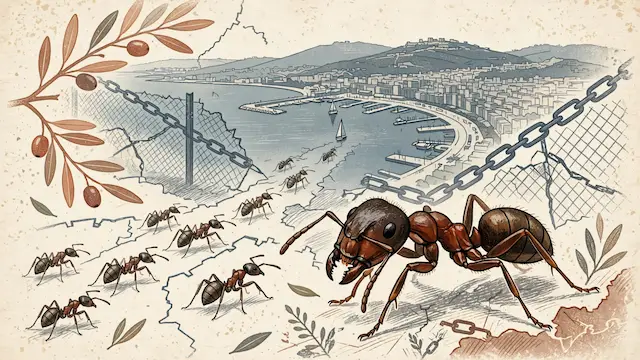
An invasive species of ant, the African large-headed ant (Pheidole megacephala), identified as one of the world's 100 most damaging invasive species, has been discovered in Israel. The Ministry of Environmental Protection announced the finding on Thursday, stating the ant was recently identified in the Neve Sha'anan neighborhood of Haifa. Investigations are also underway to confirm reports of its presence in other areas of the city.
The ministry is currently exploring pest control solutions tailored to Israeli conditions and is urging the public to report any suspected sightings to aid in mapping infestation sites and preventing further spread. This ant species, originating from Africa, has spread globally, particularly in warm climates. Its name derives from the soldier ants' distinctively large heads relative to their bodies. The species is known for its high reproductive and dispersal capabilities, forming colonies with multiple queens and extensive networks of cooperating nests.
The African large-headed ant feeds on a wide variety of food sources, including insects, seeds, and organic matter. Similar to the invasive little fire ant, its spread can be facilitated by the unintentional transport of infected potted plants, seedlings, soil, and trimmings. Its establishment poses a significant threat to local ecosystems, potentially displacing native ant species and harming other arthropods, snails, and slugs. It also preys on small vertebrates like bird hatchlings, shrews, and reptiles, causing cascading effects within the ecosystem.
Furthermore, the ant can cause agricultural damage by fostering and protecting plant pests like aphids from their natural enemies. Its proliferation may also impact infrastructure. Dr. Shay Reichler, Director of the Pests and Pest Control Department at the Ministry of Environmental Protection, emphasized the need for swift, professional action to prevent the ant from establishing itself and spreading further. While not posing a direct health risk to humans, he warned of substantial ecological damage and severe agricultural losses.
Individuals who suspect they have encountered the African large-headed ant are asked to report it to the Ministry of Environmental Protection. Key identification features include numerous ants moving rapidly in dense trails, the presence of smaller ants alongside those with disproportionately large heads (about one-third of the ant's body length), and a brown coloration (lighter in the middle, darker at the front and rear). The ants are typically 2-3 millimeters long, twice the size of the little fire ant, and are often observed climbing trees. Nests are typically found on the ground with high density, and pale brown piles of dead ants may be visible around them.
The same event, reported separately by each outlet. Open a few to compare what different newsrooms emphasize — and what they leave out.
Left 1Centre 4Right 3Haredi 2Arab 1Other 3














Not the same event — other stories that share this one’s people, places, or theme: background, reactions, and follow-ups.
