
Invasive African Ant Species Confirmed in Israel for First Time
Translated & summarized from Kipa by baba
Israel's Ministry of Environmental Protection has confirmed the first detection of the invasive African big-headed ant in Haifa. The species is considered one of the world's most damaging invasive organisms and could cause significant ecological and agricultural harm. Authorities have launched a joint effort with local and academic institutions to map, monitor, and eradicate the ant, while urging public reporting and caution to prevent its spread.
The story in 5 lines · by baba
- The invasive African big-headed ant has been confirmed in Israel for the first time, in Haifa.
- This species is among the world's 100 most damaging invasive organisms.
- The ant poses a risk of severe ecological damage and harm to agriculture and infrastructure.
- A joint effort involving Haifa Municipality, Nature and Parks Authority, and Tel Aviv University is underway.
- Residents are asked to report sightings and avoid moving potentially infested materials.
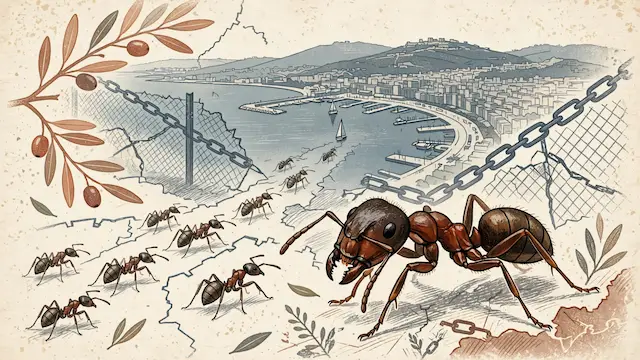
Israel's Ministry of Environmental Protection has confirmed the presence of the invasive African big-headed ant (Pheidole megacephala) for the first time in the country. This species, originating from Africa, is recognized as one of the world's 100 most damaging invasive species.
The ant was initially detected in the Neve Sha'anan neighborhood of Haifa, specifically around Giv'at HaShach'et and nearby streets, following reports from residents. Investigations are also underway to confirm its presence in the Hadar neighborhood.
In response to the discovery, a comprehensive effort involving the Haifa Municipality, the Nature and Parks Authority, and Tel Aviv University has been launched to map, monitor, and control the ant population. While not posing a direct health risk to humans, the ant's establishment in Israel could lead to severe ecological damage and significant harm to infrastructure and agriculture.
The ant colonies are characterized by multiple queens, high reproduction rates, and cooperative nest networks. They are predatory towards small vertebrates like bird nestlings, reptiles, and amphibians, displace local ant species, and negatively impact various arthropods, snails, and slugs. Additionally, they can disrupt seed dispersal and cause agricultural damage by fostering pest insects like aphids.
The Ministry of Environmental Protection urges the public, especially Haifa residents, to report any suspected sightings with photos and precise locations to Pestcontrol@sviva.gov.il. Residents are also advised to avoid moving soil, potted plants, seedlings, and garden waste from suspected infested areas to prevent further spread.
Haifa Municipality has initiated a pilot program, guided by Tel Aviv University and supervised by the Ministry of Environmental Protection's Haifa district, to test the effectiveness of various pesticides against the invasive species. Four infested plots have been selected for the pilot, with each plot testing a different pesticide to determine the most effective solution for Israel's climate.
Mentioned
The same event, reported separately by each outlet. Open a few to compare what different newsrooms emphasize — and what they leave out.
Left 1Centre 4Right 3Haredi 1Arab 1Other 2












Not the same event — other stories that share this one’s people, places, or theme: background, reactions, and follow-ups.
