
Invasive Ant Species, Among World's Most Dangerous, Discovered in Israel
Translated & summarized from Now 14 by baba
A new invasive ant species, the "big-headed" Egyptian ant, considered one of the world's 100 most harmful, has been discovered for the first time in Israel, in Haifa. The Ministry of Environmental Protection has initiated an extensive eradication program and is testing various pesticides. The ant poses a significant threat to local ecosystems and agriculture, though not to human health, and the public is asked to report sightings.
The story in 5 lines · by baba
- The "big-headed" Egyptian ant, one of the world's 100 most harmful invasive species, has been discovered in Israel.
- The ant was first identified in the Neve Sha'anan neighborhood of Haifa following resident reports.
- The Ministry of Environmental Protection has launched an immediate and extensive eradication effort.
- The invasive ant poses a significant threat to local ecosystems and agriculture.
- The public is urged to report suspected sightings and avoid moving potentially infected materials.
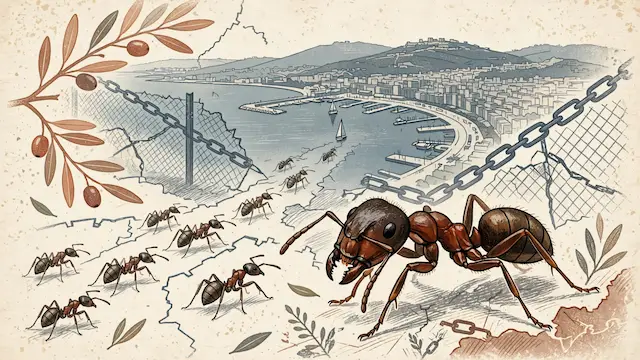
A new invasive ant species, identified as the "big-headed" Egyptian ant (Pheidole megacephala), considered one of the world's 100 most harmful invasive species, has been discovered for the first time in Israel. The ant was initially detected in the Neve Sha'anan neighborhood of Haifa following reports from residents.
The Ministry of Environmental Protection has launched an immediate and extensive eradication effort in cooperation with other entities and is investigating reports of the ant's presence in additional areas within the city. The public is urged to report any suspected sightings.
Originating from Africa, the big-headed Egyptian ant has spread to many warm climates. It is characterized by its high reproductive and dispersal capabilities, potentially expanding its territory through the unintentional transport of infected plants, soil, and cuttings, similar to the invasive fire ant. While not posing a direct health risk to humans, the ant can significantly harm ecosystems and cause substantial damage to agriculture.
Dr. Shay Reichler, Director of the Pests and Control Department at the Ministry of Environmental Protection, emphasized the need for swift action upon identifying a new invasive species. He noted that the ant could displace local ant species, harm other insects, and even affect small vertebrates like bird hatchlings and reptiles. Furthermore, it can damage agriculture by fostering aphids that harm plants and protecting them from their natural predators.
The Ministry is collaborating with the Haifa Municipality to expand monitoring and control operations. A pilot program, with professional guidance from Tel Aviv University, is underway to test the effectiveness of various pesticides against the invasive species. Ministry representatives are monitoring the pilot's progress weekly to determine the most effective treatment method. Residents, particularly those in Haifa, are asked to report suspicious observations with photos and precise locations, and to avoid moving soil, potted plants, and cuttings from suspected infested areas.
Mentioned
The same event, reported separately by each outlet. Open a few to compare what different newsrooms emphasize — and what they leave out.
Left 1Centre 4Right 3Haredi 2Arab 1Other 4















Not the same event — other stories that share this one’s people, places, or theme: background, reactions, and follow-ups.
