Invasive African Ant Species Detected for First Time in Israel
Translated & summarized from Jüdische Allgemeine by baba
The African big-headed ant, an invasive species, has been detected for the first time in Israel, with residents in Haifa reporting its presence. Experts are working to map infestations and determine control methods, as the ant can harm local ecosystems and agriculture. The Ministry of Environmental Protection and Haifa Municipality are collaborating on monitoring and pesticide trials to contain its spread.
The story in 6 lines · by baba
- The invasive African big-headed ant has been detected for the first time in Israel, in Haifa.
- Experts are mapping infested areas and investigating the ant's establishment in other districts.
- The ant poses a threat to local ecosystems by displacing native species and harming wildlife.
- It can also cause significant damage to agriculture, particularly by cultivating crop-damaging aphids.
- The Ministry of Environmental Protection and Haifa Municipality are collaborating on monitoring and pesticide trials.
- Shai Reichner stated that swift action is needed to prevent further spread of the species.
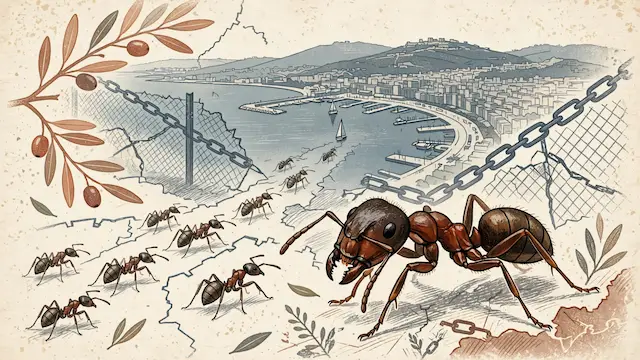
Israel's Ministry of Environmental Protection announced on Thursday the first confirmed detection of the invasive African big-headed ant (Pheidole megacephala) within the country. Residents in Haifa first identified the species, which originates from the African continent and has spread globally, particularly in warm climates. Experts are currently mapping infested areas and investigating its potential establishment in other city districts.
The big-headed ant is known for its rapid reproduction and spread. Its colonies can contain multiple queens and form extensive, cooperative nest networks. The ant feeds on diverse sources, including insects, seeds, and organic matter. Its presence poses a significant threat to local ecosystems, displacing native ant species and killing arthropods like snails. It can also prey on small animals such as young birds, squirrels, and reptiles, disrupting ecological processes like seed dispersal.
Beyond ecological damage, the ant can cause severe harm to agriculture, notably by cultivating aphids that damage crops. The Ministry of Environmental Protection is collaborating with the Haifa Municipality, Tel Aviv University, and other organizations to expand monitoring efforts. The ant has so far been found in Haifa's Neve Sha'anan neighborhood.
"The identification of a new invasive species in our country requires swift and systematic action before it becomes established and spreads to further areas," stated Shai Reichner, Head of the Department for Pests and Pest Control at the Ministry of Environmental Protection. The ministry aims to locate additional infestation sites and research suitable treatment methods for Israel's climate and environment to curb the insect's proliferation.
The Haifa Municipality has launched a pilot project to test the efficacy of pesticides against the invasive species. Four affected plots have been designated for the experiment, with each plot testing a different pesticide to determine the most effective local treatment. Reichner emphasized that while the ant does not pose a direct health risk to humans, it can inflict substantial damage on ecosystems and agriculture.
Mentioned
The same event, reported separately by each outlet. Open a few to compare what different newsrooms emphasize — and what they leave out.
Left 1Centre 6Right 3Haredi 2Arab 2Other 5


















