
Invasive African Ant Species Detected in Haifa, Posing Ecological and Agricultural Threat
Translated & summarized from Maariv by baba
The invasive African big-headed ant has been detected in Haifa, Israel, posing a significant threat to local ecosystems and agriculture. The Ministry of Environmental Protection and Haifa Municipality are collaborating on mapping, monitoring, and control efforts, including a pilot program for pest control agents. Residents are urged to report sightings and avoid moving potentially infested materials to prevent further spread.
The story in 5 lines · by baba
- An invasive African big-headed ant species has been identified in Haifa, Israel.
- The ant poses a threat to local ecosystems by displacing native species and preying on small animals.
- It can also cause agricultural damage by promoting pest insects and impacting plant health.
- The Ministry of Environmental Protection and Haifa Municipality are implementing control and monitoring measures.
- The public is asked to report sightings and avoid moving potentially infested materials to curb spread.
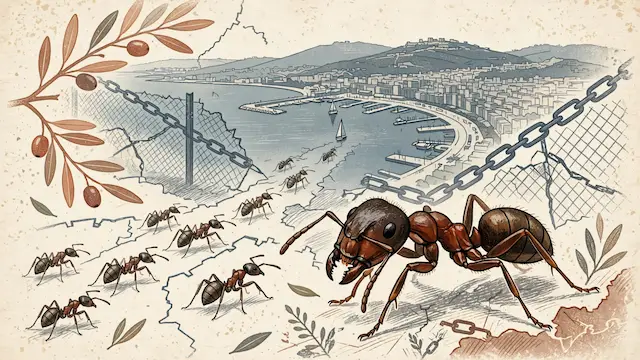
The invasive African big-headed ant (Pheidole megacephala) has been identified in Haifa, Israel, raising concerns about its potential to cause significant damage to local ecosystems and agriculture. This species is known for its ability to displace native ant populations, harm other arthropods, snails, and slugs, and prey on small vertebrates like bird chicks, shrews, and reptiles. Its presence can lead to cascading effects within the ecosystem, such as disrupting seed dispersal by native ants. Furthermore, the ant can foster the growth of plant pests by protecting them from their natural enemies, potentially causing agricultural losses and even impacting infrastructure.
The Ministry of Environmental Protection, in collaboration with the Haifa Municipality, is actively working to map infestation sites, monitor the ant's spread, and develop control strategies to prevent its establishment in new areas. A pilot program is underway to test the efficacy of pest control agents against the invasive species, guided by Tel Aviv University. The Ministry urges the public, especially Haifa residents, to report suspected sightings with photos and precise locations to the provided email address.
To prevent further spread, residents are advised to avoid moving soil, potted plants, seedlings, and garden waste from potentially infested areas. The African big-headed ant, originating from Africa, has a high reproductive and dispersal rate and can establish extensive networks of interconnected nests. It is omnivorous, feeding on insects, seeds, and organic matter. Its spread is often facilitated by the unintentional transport of infested materials like plants and soil.
Dr. Shay Reichler, Director of the Pests and Pest Control Department at the Ministry of Environmental Protection, emphasized the need for swift, professional action to contain the species before it spreads further. While not a direct health hazard to humans, its ecological and agricultural impacts are substantial. He highlighted the importance of early detection and the development of effective, tailored pest control solutions, noting the crucial role of public reporting in understanding the scope of the problem and focusing control efforts.
Mentioned
The same event, reported separately by each outlet. Open a few to compare what different newsrooms emphasize — and what they leave out.
Left 1Centre 6Right 3Haredi 2Arab 2Other 5

















