Water Crisis Halts Desalination Plants, Threatens Crops and Food Prices
Translated & summarized from Walla by baba
Severe sea turbidity has temporarily halted desalination plants in Israel, forcing water rationing for agriculture. Farmers are protesting the cuts, warning of significant crop damage and potential food shortages and price hikes.
The story in 5 lines · by baba
- Desalination plants halted due to sea turbidity.
- Water rationing imposed on agriculture in southern Israel.
- Farmers warn of massive crop damage and financial losses.
- Potential for tomato shortages and price increases.
- Residents report reduced water pressure in southern towns.
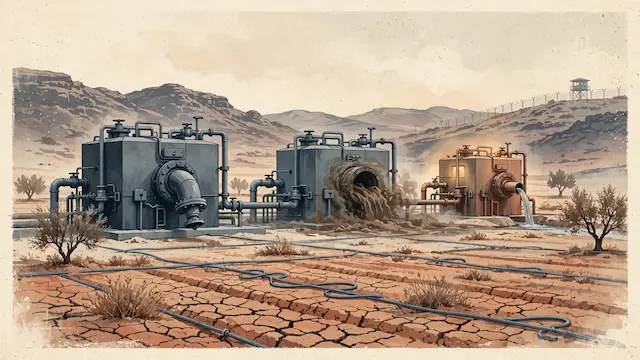
Severe turbidity in the Mediterranean Sea, caused by recent weather and strong winds, has temporarily shut down some water desalination facilities in central and southern Israel. This has led the Water Authority to immediately reduce the supply of potable water to agriculture and public gardens in the southern and western Negev regions. The measure aims to ensure sufficient water for household consumption and prevent shortages.
Farmers in the Nitzana area protested the decision on Tuesday, reporting they are currently receiving only 25% of their needed water supply. "The plants are on chicken legs," said Sharon Chari, a farmer cultivating 50 dunams of Asian vegetables, warning of tens of millions in damages if the situation persists. He pleaded for help, highlighting the potential loss of livelihoods for numerous farmers.
Eran Doron, head of the Ramat Negev Regional Council, stated that dozens of cubic meters of water are missing to overcome the crisis, warning that thousands of dunams could dry up and tens of farmers could lose their income. He also cautioned that a shortage of tomatoes might occur within a month, leading to price increases.
In parallel, residents in other southern areas reported issues with water pressure. Sderot residents experienced low pressure, and in Arad, the municipality informed residents of potential water interruptions in industrial zones and reduced pressure in homes.
Mentioned
The same event, reported separately by each outlet. Open a few to compare what different newsrooms emphasize — and what they leave out.
Centre 3Right 2Haredi 2Other 2