
Israel Faces Water Crisis as Desalination Plants Shut Down
Translated & summarized from Mako by baba
Israel's desalination plants are largely offline due to turbid seawater, impacting agriculture and causing uncertainty about water supply. The crisis, linked to extreme weather and potentially insufficient water reserves, is expected to last days, with the Energy Minister promising increased pumping and additional plant activation.
The story in 5 lines · by baba
- Most of Israel's desalination plants are shut down due to turbid seawater.
- The agricultural sector faces catastrophic losses and potential food security risks.
- The crisis duration is uncertain, with potential multi-day disruptions.
- Extreme weather and insufficient water reserves are cited as causes.
- Energy Minister promises increased pumping and additional plant activation.
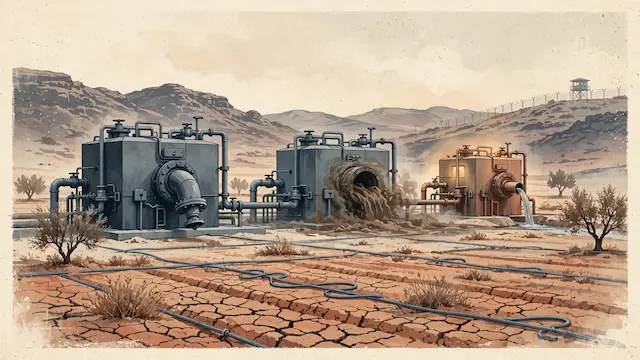
Israel is experiencing a prolonged water crisis as a surge of turbid water, believed to originate from the Nile River in Egypt, has disrupted the operation of most of its major desalination plants along the Mediterranean coast. The unusual turbidity prevents the plants from properly processing seawater, leading to widespread shutdowns. Initially expected to last only a few hours, the disruptions have extended, with authorities and farmers expressing skepticism about swift resolutions and warning of potential multi-day interruptions.
The professional explanation attributes the event to extreme weather conditions that concentrated pollutants from Egypt, impacting five of the country's six large desalination facilities. However, some in the water sector point to a systemic issue: plants operate at full capacity only during summer, with reduced output the rest of the year, failing to build sufficient reserves for emergencies. Concerns about a cyberattack were raised but were dismissed by national cyber officials, who confirmed the issue stems solely from water quality.
While domestic water consumption has seen limited, uneven impacts, with some municipalities reporting lower water pressure and advising conservation, the agricultural sector faces severe consequences. Farmers warn of catastrophic losses to crops, potentially jeopardizing food security and raising prices. The Israel Farmers Federation has urgently appealed to government ministers for immediate intervention, damage assessment, and compensation for affected farmers, particularly family farms.
The duration of the crisis remains uncertain, as an earlier assessment that the event was over proved incorrect when a plant shut down again. Authorities are preparing for potential partial shutdowns lasting several days. Experts suggest that better preparation, including fully stocking water reservoirs during previous wetter winters, could have mitigated the impact. This incident is viewed as part of a broader climate crisis, with Israel facing a dry winter and limited water reserves, suggesting a future with more frequent extreme weather events disrupting infrastructure.
Energy Minister Eli Cohen assured the public that Israel has a robust water system and that regular supply to homes will be maintained. He announced increased pumping from boreholes and the Sea of Galilee, along with the activation of two additional desalination units. Cohen acknowledged the unprecedented nature of the turbidity, which has led to the shutdown of most plants, and stated that water supply to agriculture and public landscaping has been reduced, with plans to bring more desalination capacity online to support agriculture. He thanked the workers of Mekorot, the Water Authority, and the energy sector for their round-the-clock efforts.
Mentioned
The same event, reported separately by each outlet. Open a few to compare what different newsrooms emphasize — and what they leave out.
Centre 3Right 2Haredi 2Other 2








