
Heavy Rains Shut Down Desalination Plants, Threatening Southern Agriculture
Translated & summarized from Walla by baba
Heavy rains have forced five of Israel's six desalination plants offline, prompting the Water Authority to reduce water supplies to agriculture in the south to ensure domestic needs are met. Farmers are adjusting irrigation schedules, hoping the disruption is short-lived to prevent significant crop damage.
The story in 5 lines · by baba
- Five of six Israeli desalination plants shut down due to heavy rains.
- Water Authority cuts agricultural water supply in the south.
- Farmers reduce irrigation to one cycle daily.
- Reduced watering occurs during critical fruit development and export season.
- Farmers hope for a quick resolution to minimize crop damage.
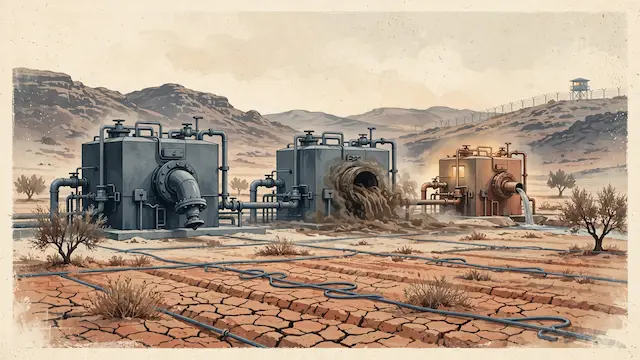
Heavy rains in recent days have caused five of Israel's six desalination plants to cease operations, leading to significant disruptions in the national water supply. In response, the Water Authority has instructed an immediate reduction in the supply of fresh water to agriculture and public gardens in the southern and western Negev regions.
This measure aims to prioritize water for domestic use and prevent shortages. The Water Authority stated that the water economy is fully managed and that Mekorot, the national water company, is maximizing available production sources. Professional teams are monitoring water quality, with expectations that some plants will resume operations once the seawater clears.
Farmers in southern Israel are already feeling the impact. Yaron Solomon, a farmer from Moshav Dekel in the Eshkol Region and a representative of the United Agricultural Union, reported switching from three daily irrigation cycles to just one. He described the timing as difficult, with temperatures around 34 degrees Celsius (93 degrees Fahrenheit) and heavy fruit development, particularly for the Ettinger avocado variety slated for export in late September.
Despite the challenges, Solomon noted that farmers are cooperating to avoid a complete water cutoff. He expressed hope that if the plant malfunction is resolved within a day or two, crop damage will be minimal, as trees can withstand short periods of reduced watering. "Once the sea calms down and the plants return to operation, we can make up for the irrigation gaps based on soil measurements," he explained, adding, "The systems today are reliable, and we hope the event will pass quickly."
Mentioned
The same event, reported separately by each outlet. Open a few to compare what different newsrooms emphasize — and what they leave out.
Centre 3Right 2Haredi 2Other 2








