
Heavy Rains Shut Down Most Israeli Desalination Plants, Threatening Water Supply
Translated & summarized from Walla by baba
Heavy rains caused increased seawater turbidity, leading to the shutdown of most of Israel's desalination plants and disruptions in water supply. While domestic supply is prioritized, agriculture and public gardening face cutbacks, with farmers in the southern Negev facing significant threats.
The story in 5 lines · by baba
- Most Israeli desalination plants shut down due to high seawater turbidity.
- Water supply disruptions occurred nationwide following the plant shutdowns.
- Agriculture and public gardening face immediate water usage restrictions.
- Farmers in the southern Negev face threats to crops and livelihoods.
- Two Sorek desalination plants later resumed operations, returning supply to routine.
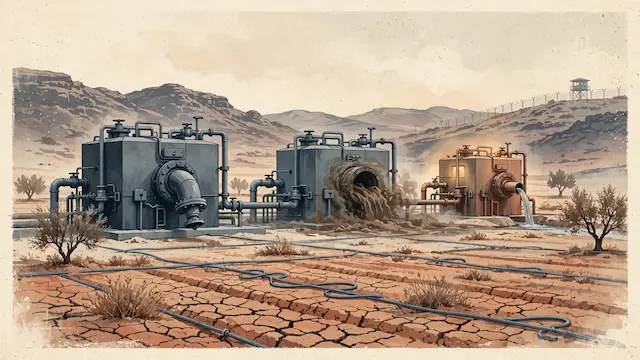
Most of Israel's desalination plants were shut down Tuesday morning following a significant increase in seawater turbidity caused by recent heavy rains. The shutdown, which began overnight, has led to disruptions in the national water supply. The Water Authority has instructed a reduction in public gardening and agricultural water usage, particularly in the southern and western Negev regions, to ensure continued supply for domestic consumption.
The crisis has severely impacted the Nitzana development area in the Ramat Negev Regional Council, endangering approximately 20,000 dunams of vegetable crops belonging to dozens of farmers near the Egyptian border. Ramat Negev Council head Eran Doron warned of a "real threat to food security, the cost of living, and the supply of fresh food production in Israel, as well as harm to farmers' livelihoods and the region's economic future."
Five out of six desalination plants across the country were idled due to the turbidity. This led to significant disruptions in regular water supply nationwide. Residents in Tel Aviv, Givatayim, Jerusalem, Rishon LeZion, and Bat Yam were previously informed of potential water supply disruptions, including reduced pressure and possible outages.
Later, the Water Authority announced that two additional desalination plants in Sorek had resumed operations. Following an assessment, the water economy was reported to have returned to routine. The article also briefly mentions laboratory results indicating the presence of banned pesticides, specifically endosulfan, in fish and water samples from the Tzalmon stream estuary leading to the Sea of Galilee, though this appears unrelated to the desalination plant issue.
Mentioned
The same event, reported separately by each outlet. Open a few to compare what different newsrooms emphasize — and what they leave out.
Centre 3Right 2Haredi 2Other 2








