Israel Water Supply Disrupted by Algae Bloom Affecting Desalination Plants
Translated & summarized from i24NEWS by baba
Israel is experiencing severe water supply issues affecting homes and agriculture due to the shutdown of most desalination plants caused by a rare micro-algae bloom. While some plants are resuming operations, conservation measures are in place, and farmers are facing significant losses.
The story in 6 lines · by baba
- Five of Israel's six desalination plants shut down due to high seawater turbidity.
- Water pressure drops and outages reported in cities like Beersheba and Jerusalem.
- Three plants have resumed operations; two remain offline.
- Algae bloom from Nile region suspected cause of unusual turbidity.
- Water restrictions imposed on public gardens and agriculture.
- Farmers seek compensation for crop damage due to irrigation halt.
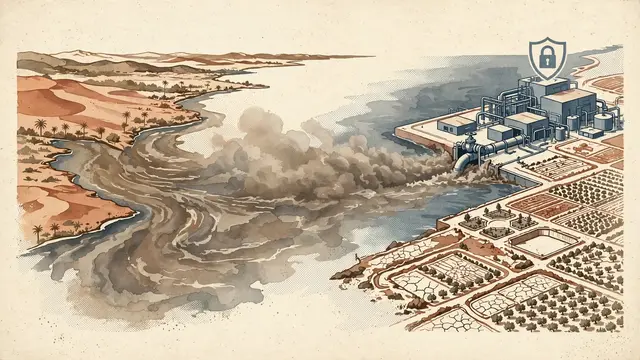
Severe water supply disruptions affected homes across Israel on Tuesday, with cities like Beersheba and Jerusalem reporting low water pressure and localized outages. The crisis stems from the shutdown of five out of six national desalination plants due to unusually high turbidity in seawater. The Water Authority announced that three plants, Sorek A, Sorek B, and Palmahim, have resumed operations, while Ashdod and Ashkelon remain offline.
Municipal water corporations have advised residents to conserve water for essential needs only, stating that national supply issues persist with no immediate return to normal expected. The phenomenon is believed to be caused by a micro-algae bloom originating from the Nile region, significantly increasing seawater turbidity, a condition not seen in twenty years, according to Energy and Infrastructure Minister Eli Cohen.
Cohen assured that Israel has a robust water system and pledged to ensure regular supply to all households. He also mentioned that additional desalination facilities are being activated, and pumping from the Sea of Galilee and groundwater wells has been increased.
To guarantee regular household supply, water flow to public gardens and agriculture has been reduced. This measure exacerbates the difficulties faced by agricultural farms, particularly in the southern regions and the Negev. The Ministry of Agriculture and Food Security warned that prolonged irrigation cessation could cause irreversible damage to certain crops, especially young seedlings and greenhouse produce.
Emergency water supplies via tankers have been initiated for dairy farms in Kibbutz Gezer and Moshav Matzliach. The Farmers' Union has formally requested government compensation for significant economic losses incurred by farmers due to the irrigation halt, especially with the High Holidays approaching. The Ministry of Agriculture, Water Authority, and Mekorot are continuing to assess the situation and provide localized solutions to farms to prevent disruptions in the supply of fresh food.
Mentioned
The same event, reported separately by each outlet. Open a few to compare what different newsrooms emphasize — and what they leave out.
Left 1Centre 5Right 2Haredi 2Other 5