Water Shortage Threatens Israeli Crops After Desalination Plants Halt
Translated & summarized from Globes by baba
Five of Israel's six major desalination plants have shut down due to high sea turbidity from an algae bloom, causing water shortages for agriculture. The Ministry of Agriculture warns of potential crop damage and threats to fresh produce supply for the holidays.
The story in 5 lines · by baba
- Desalination plants halted due to algae bloom, impacting water supply.
- Agriculture faces reduced water, risking crop damage and holiday produce.
- Southern farmers, especially in the Negev, report severe shortages.
- Domestic water supply prioritized, with alternative sources utilized.
- Emergency water tankers deployed as temporary relief.
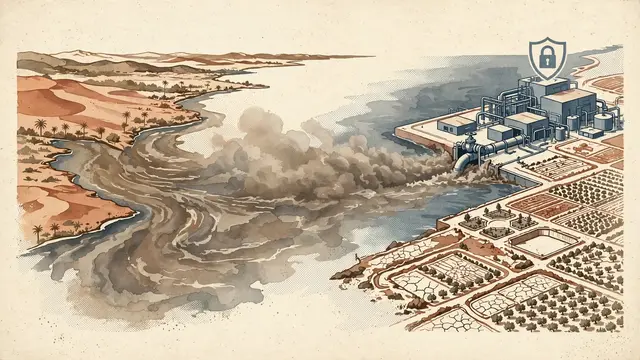
Israel's Ministry of Agriculture is warning of severe consequences for agricultural produce following the shutdown of five of the country's six major desalination plants. The disruption, caused by unusually high turbidity in the Mediterranean Sea likely due to a bloom of microscopic algae originating near the Nile Delta, has led to a significant reduction in water supply for agriculture. This measure is intended to prioritize water for household consumption, with alternative sources like the Sea of Galilee and groundwater wells being utilized, and increased pumping to maintain domestic supply.
Farmers, particularly in the southern Negev region and the Nitzana outflow area known for extensive vegetable and greenhouse cultivation, are already experiencing shortages. The ministry highlights that unlike other water uses, irrigation cannot be postponed. Prolonged interruptions during hot weather and peak growing seasons could cause irreversible damage to seedlings and crops, impacting future yields. Oren Levi, Director General of the Ministry of Agriculture, described the situation as "an unusual event requiring swift action," emphasizing that water is not a postponable resource for farmers.
If the water shortage persists, the ministry warns that the continuity of fresh produce supply for the upcoming High Holidays could be jeopardized. Difficulties in water supply have also been reported in the Ashkelon coast, Negev fields, the Shfela and Har regions, the Gazer Regional Council, the Benjamin area, and East Lachish.
The Ministry of Agriculture is collaborating with the Water Authority and Mekorot to prioritize farms facing immediate threats to crops or livestock. Emergency solutions, such as water tankers, are being deployed to specific locations, including dairy farms in Kibbutz Gazer and Moshav Mazliach, though these are considered temporary measures and not a substitute for regular supply.
Mentioned
The same event, reported separately by each outlet. Open a few to compare what different newsrooms emphasize — and what they leave out.
Left 1Centre 5Right 2Haredi 2Other 5