Israel's Desalination Plants Shut Down Due to Algae Bloom, Affecting Farmers
Translated & summarized from Ynet by baba
Israel's desalination plants were largely shut down due to a micro-algae bloom causing severe water turbidity, impacting agricultural water supply. While some plants have resumed partial operations, farmers face significant losses, and experts warn of future, potentially longer disruptions.
The story in 6 lines · by baba
- Desalination plants shut down due to algae bloom causing water turbidity.
- Farmers in the Negev are without water, facing potential crop destruction.
- Some plants have resumed partial operations, but Ashdod and Ashkelon remain offline.
- Algae bloom likely originated from the Nile Delta and is difficult to filter.
- State Comptroller previously warned of potential disruptions to desalination facilities.
- Experts call for contingency plans to manage future similar events.
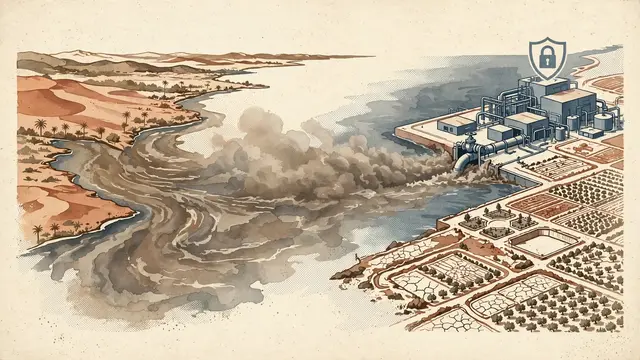
A significant portion of Israel's water supply comes from desalination plants, a field in which the country is a pioneer. However, most of these plants were shut down due to unusually turbid seawater, believed to be caused by a micro-algae bloom originating from the Nile Delta. This shutdown has halted water supply to farmers in the Negev region and led local authorities to instruct against watering public gardens. While disruptions to domestic water supply were reported, including in Be'er Sheva, the overall impact on household consumption was not expected to be severe.
In the evening, the Ministry of Energy announced that the Sorek A, Sorek B, and Palmahim desalination plants had resumed operations, albeit not at full capacity, following a decrease in water turbidity. The Palmahim plant, along with Sorek A and B, had been reactivated, with Sorek B following later. The Ashdod and Ashkelon plants remained non-operational. The resumption of operations at these facilities adds approximately 20,000 cubic meters of water per hour. "Mekorot" (Water Resources) stated that agricultural water supply would be restored later in the evening as domestic consumption decreased, and indeed, water returned to irrigation pipes in the Ramat Negev region around 9:30 PM.
During normal summer days, Israel's daily water consumption, including agriculture, is around 3.9 million cubic meters. The desalination plant shutdown created a potential deficit of about 85,000 cubic meters per hour, with the cut to agriculture amounting to approximately 300,000 cubic meters per day. Dani Sofer, acting CEO of Mekorot, explained that the shutdown of five plants necessitated the use of the entire natural water system, bringing supply to about 90% of summer capacity. He noted that such an issue would be less noticeable in winter due to lower water consumption.
Six major desalination plants are located on the Mediterranean coast: Ashkelon, Palmahim, Sorek A, Sorek B, Ashdod, and Hadera. The Hadera plant was the only one not affected. The turbidity is attributed to extremely small algae, identified as pico-phytoplankton, possibly cyanobacteria, which can bypass the intake filters. Experts are still working to precisely identify the species. The algae are not considered toxic, and therefore, beaches were not closed. The issue is exacerbated during the summer due to high water demand.
Farmers in southern Israel, particularly in the Nitzana Gate area, are facing a critical situation, with some reporting no water at all. They expressed concerns that the prolonged lack of water could lead to the destruction of their farms, especially as they are in the peak season for harvesting tomatoes and cherry tomatoes, a significant source of supply for holidays. The State Comptroller's office had previously warned in a November 2024 report about potential disruptions to desalination plants, citing 14 incidents of seawater contamination between 2007 and 2023, caused by microbial pollution, fuel, oil, and turbidity, leading to production stoppages ranging from hours to five days.
Experts suggest that while such events cannot be entirely prevented, "reserve solutions" are needed to manage them. There are currently limited pre-filtration methods for this type of algae bloom that would allow continuous water production. Professor Ido Bar-Zeev from Ben-Gurion University warned that this event is a precursor to similar incidents, particularly oil spills, which could lead to much longer desalination plant shutdowns, potentially for six months, for which there is currently no contingency plan beyond shutting down the facilities.
Mentioned
The same event, reported separately by each outlet. Open a few to compare what different newsrooms emphasize — and what they leave out.
Left 1Centre 5Right 2Haredi 2Other 5