Israel's Desalination Plants Halt Operations Due to Algae Bloom
Translated & summarized from Channel 9 by baba
Israel's desalination capacity was drastically reduced when nearly all plants shut down due to an algal bloom from the Nile Delta. The country faced water shortages, particularly in agriculture and public areas, as the plankton clogged filtration systems. Experts warn these events may increase due to climate change and pollution.
The story in 5 lines · by baba
- Nearly all Israeli desalination plants stopped working due to an algal bloom.
- The shutdown caused water shortages and reduced capacity to 15%.
- Plankton bypassed filters, clogging expensive desalination membranes.
- Deeper water intakes and DAF systems could prevent future issues.
- Experts predict more frequent disruptions due to climate change.
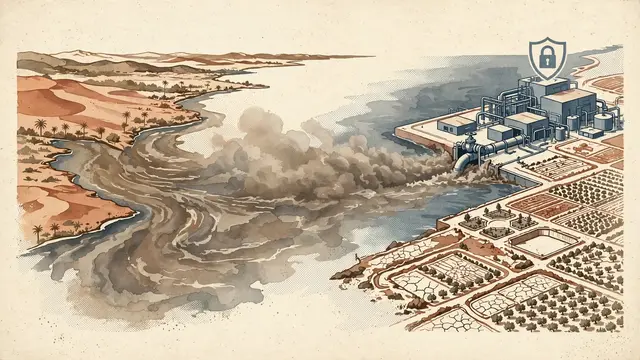
Nearly all of Israel's desalination plants ceased operations starting Saturday, August 29, due to a massive bloom of microscopic algae and plankton carried by currents from the Nile Delta. This disruption, which affected plants in Ashkelon, Ashdod, Sorek, and Palmahim, reduced the country's desalination capacity to approximately 15% by Monday, with only the Hadera plant remaining fully operational. The southern part of the country experienced the most severe impacts, with agricultural water supply halted in Ramat Negev and irrigation reduced elsewhere, prioritizing potable water for residents.
Residents in central Israel, including Tel Aviv and its surrounding cities, were warned of reduced water pressure and potential outages. Public amenities like beach showers were shut off, and public area irrigation was stopped. In Jerusalem, some neighborhoods faced actual water supply interruptions, leading the Gihon company to open distribution points and advise residents to conserve water, avoid watering gardens, and refrain from filling swimming pools.
The Water Resources Administration attributed the shutdown to "clouding of seawater after a storm," comparing it to "shaken coffee grounds." However, experts clarified that the issue was a "living mass" of single-celled plankton, far smaller than sand particles, which bypassed the initial filtration stages designed for sand, silt, and jellyfish. This plankton, when crushed, releases a viscous slime that coats the expensive reverse osmosis membranes, halting water flow and resisting chemical cleaning.
The article explains that while deeper water intakes (below 15-20 meters) and Dissolved Air Flotation (DAF) systems can mitigate such blooms, many Israeli plants were built before these technologies were widely adopted or were designed with lower-cost bids in mind. The Hadera plant's continued operation is attributed to its deeper water intake. The article also disputes the claim that this was the first such incident in five years, citing state audits that recorded numerous water quality-related shutdowns since 2007.
Experts predict such events will become more frequent due to rising sea temperatures and increased pollution from the Nile. The current approach, prioritizing low cost and limited space, has left the system vulnerable to these rare but powerful algal blooms. The upcoming Emek Hefer desalination plant, despite its large capacity, is also facing scrutiny regarding its preliminary treatment processes, with concerns that cost considerations may again overshadow the need for robust protection against such disruptions.
Mentioned
The same event, reported separately by each outlet. Open a few to compare what different newsrooms emphasize — and what they leave out.
Left 1Centre 5Right 2Haredi 2Other 5