Nepal Floods Kill Over 1,000; Two Israelis Among Missing
Translated & summarized from Walla by baba
Over 1,000 people have died in severe floods and landslides in Nepal, with thousands more missing, including two Israelis. Rescue efforts are ongoing, complicated by the scale of destruction and the challenge of identifying victims.
The story in 5 lines · by baba
- Nepal floods have killed over 1,000, with thousands still missing.
- Two Israeli tourists are among the many foreign nationals unaccounted for.
- Rescue operations involve thousands of soldiers and local teams.
- The disaster was caused by a glacial lake outburst flood.
- China is sending DNA experts to help identify victims.
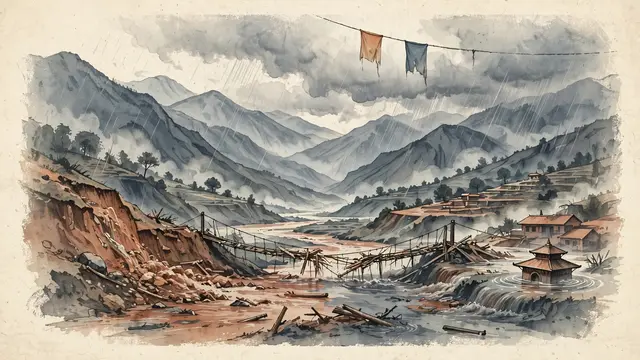
The death toll from devastating floods and landslides in Nepal has surpassed 1,000, with thousands still missing, according to Reuters. Rescue and recovery efforts are ongoing for approximately 4,000 individuals unaccounted for. The disaster has also impacted Tibet, where authorities report 16 deaths and 546 missing.
Among the missing are hundreds of foreign nationals, including at least 747 foreigners in Nepal, with 583 of them identified as tourists present during the floods. Nepal's army has deployed nearly 10,000 soldiers to assist local rescue teams in the extensive search for the missing, with efforts increasingly focused on locating and identifying bodies.
China has offered to send DNA experts to aid in identifying victims who cannot be identified through other means. The Israeli Foreign Ministry is actively working with local authorities to locate a 41-year-old Israeli woman and is in contact with her family. Another missing Israeli is a man in his 60s who was traveling with a group of foreign tourists; contact was lost after the severe floods and mudslides.
Harel Insurance Company has dispatched a search and rescue team to Nepal to assist in locating their policyholder and his travel group in the Rasuwa region, near the Nepal-China border.
The disaster was triggered by a glacial lake outburst flood, where a massive amount of ice, rocks, and debris blocked the Langtang River, forming a temporary dam. When this natural dam collapsed, a tsunami-like surge swept down the valley, inundating rivers and carrying away homes, vehicles, and bodies for hundreds of kilometers.
Climate experts suggest that conditions for the collapse may have developed over weeks or months due to rising temperatures and increased melting of ice and permafrost, potentially destabilizing Himalayan slopes. Heavy rainfall at higher altitudes, where snow previously fell, could also have weakened rock and soil layers. However, scientists are cautious about definitively attributing the event's scale to climate change at this stage.
Mentioned
The same event, reported separately by each outlet. Open a few to compare what different newsrooms emphasize — and what they leave out.
Centre 8Right 3Haredi 2Other 2