
Israel Grapples With Data Center Boom Amid Environmental Concerns
Translated & summarized from Calcalist by baba
Israel's Electric Authority is finalizing new regulations for data center connections, proposing a 200-megawatt consumption limit per facility. This expansion, driven by AI demand, requires significant new power generation, potentially leading to increased pollution and health risks. While the Finance Ministry delays a cost-benefit analysis, the Electric Authority is expected to approve substantial new capacity, raising concerns about environmental impact and energy security.
The story in 6 lines · by baba
- Israel's Electric Authority will soon publish new rules for data centers, capping consumption at 200 megawatts per facility.
- The demand for data centers could require up to 40 new gas-fired power plants, significantly increasing pollution.
- By 2030, data centers are projected to consume 15% of Israel's electricity, straining the national grid.
- Environmental groups and international examples highlight concerns over air pollution, noise, and health impacts from data centers.
- The Ministry of Finance has delayed a crucial cost-benefit analysis, leaving regulators to act without full data.
- The Ministry of Environmental Protection has remained notably quiet on the issue, contrary to global trends.
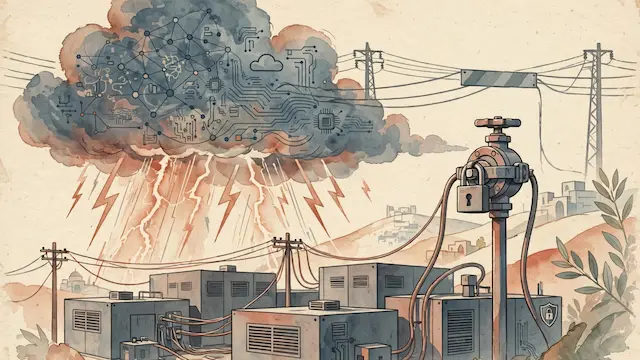
Israel is facing a significant debate over the rapid expansion of data centers, driven by the global surge in demand for artificial intelligence. The Israel Electric Authority is set to release new regulations for connecting these facilities to the national grid after a three-month pause. A key proposed condition limits each data center to a consumption of 200 megawatts, a colossal amount equivalent to an average Israeli city like Ashdod, necessitating new power plants and gas supply.
Currently, there is a demand for data centers that would collectively consume 27,000 megawatts, requiring approximately 40 gas-fired power plants. While not all proposed centers will be built, the Electric Authority is expected to approve an additional 1,000 megawatts in the immediate future, on top of the 2,000 megawatts already greenlit. This would add capacity comparable to serving 1.5 million households.
The Ministry of Finance has delayed submitting a report detailing potential criteria and cost-benefit analyses for the sector, leaving the Electric Authority to establish policy without comprehensive government guidelines. This lack of oversight raises concerns about environmental and health damages, especially as similar projects face scrutiny and public opposition globally due to pollution, noise, and increased electricity costs.
Estimates suggest that by the end of the decade, data centers could consume 15% of Israel's electricity. The environmental cost is substantial, with studies projecting significant increases in carbon dioxide emissions and potential health impacts, including hundreds of thousands of asthma cases and premature deaths annually in the US alone due to AI-related power generation pollution.
Despite global trends of project freezes and local community backlash against data centers, Israel is moving forward with plans that could lead to the construction of at least three new power stations to meet the demand. The National Economic Council reportedly favors minimal restrictions on the data center market, potentially leading to uncontrolled growth. Notably, the Ministry of Environmental Protection, headed by Minister Idit Silman, has been largely silent on the issue, a departure from international regulatory trends.
Mentioned
The same event, reported separately by each outlet. Open a few to compare what different newsrooms emphasize — and what they leave out.
Other 4



Not the same event — other stories that share this one’s people, places, or theme: background, reactions, and follow-ups.


