
Israel Limits New Data Centers to 200 Megawatts
Translated & summarized from Calcalist by baba
Israel's Electricity Authority has limited new data centers to a maximum of 200 megawatts each, allocating 1,000 megawatts for large facilities. This decision addresses an overwhelming demand for grid connections, which totaled 27,000 megawatts. The new rules require developers to post significant financial guarantees and implement backup systems. The regulations come amid concerns over rising natural gas prices and the need to increase overall electricity generation capacity.
The story in 6 lines · by baba
- Israel's Electricity Authority capped new data centers at 200 megawatts, allocating 1,000 megawatts for large facilities.
- The decision addresses 27,000 megawatts of data center connection requests, triple Israel's current average electricity use.
- Developers must now provide 2 million shekels per megawatt as a guarantee for grid connections.
- New data centers will require backup systems to disconnect during extreme grid load conditions.
- The regulations are being implemented alongside warnings of rising natural gas and electricity prices.
- A 200-megawatt data center requires over 4 billion shekels to build and consumes power like a medium-sized city.
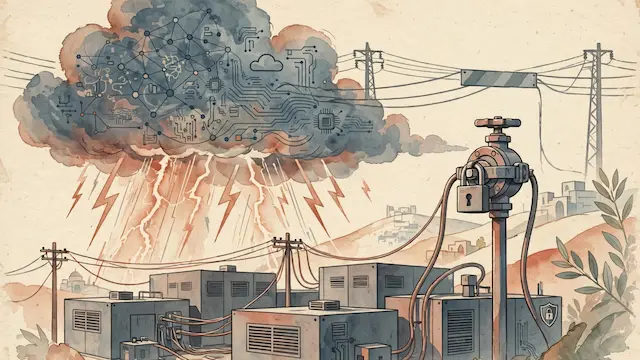
Israel's Electricity Authority has published new regulations capping the maximum power capacity for new data centers at 200 megawatts. This decision follows a lengthy discussion and aims to manage the significant demand for electricity from these facilities. The Authority will allocate a total of 1,000 megawatts for large data centers, which, combined with approximately 2,000 megawatts already approved, represents about 3,000 megawatts. This figure is equivalent to roughly 20% of Israel's projected electricity consumption in 2030, a move the Authority states will position Israel as a global leader in server farm capacity relative to consumption.
The new regulations were necessitated by an overwhelming number of applications submitted to Noga, the company managing the electricity grid. These requests totaled 27,000 megawatts, three times the average daily electricity consumption in Israel. To prevent developers from reserving grid capacity with low-feasibility applications and to curb the trading of permits, the Authority has implemented a temporary order freezing responses to these requests. Developers will now be required to provide guarantees of 2 million shekels per megawatt of connection, along with other conditions.
Furthermore, the Authority will mandate backup systems enabling data centers to be disconnected from the grid during extreme load conditions. A 200-megawatt data center consumes electricity comparable to a medium-sized Israeli city and requires an investment exceeding 4 billion shekels to build. The full decision will be published soon for a three-week public hearing before it takes effect.
In parallel with these data center regulations, concerns are rising about potential increases in natural gas and electricity prices. The collapse of a natural gas supply deal from the Leviathan field partners, Delek Drilling and Noble Energy, has led to warnings. Gershon Berkovitz, Legal Advisor of the Israel Electric Corporation, cautioned in June about rising gas prices and potential competition issues in the domestic market that could jeopardize the country's energy needs. While the new regulations will limit the size of new data centers, preventing the construction of massive 500 or even 1,100-megawatt facilities for which applications were submitted, increasing electricity generation capacity will also be crucial to meet growing national demand.
Mentioned
The same event, reported separately by each outlet. Open a few to compare what different newsrooms emphasize — and what they leave out.
Other 4



Not the same event — other stories that share this one’s people, places, or theme: background, reactions, and follow-ups.


