
Israel Limits New Data Center Power to 200MW Amid Demand Surge
Translated & summarized from Calcalist by baba
Israel's Electricity Authority will limit new data center power capacity to 200 megawatts, aiming to manage surging demand and protect the national grid. The decision follows a review prompted by numerous applications for large facilities that threatened to exceed the country's electricity generation capacity. While the 200MW cap is considered reasonable, the global demand for AI infrastructure makes Israel an attractive, though challenging, location for these energy-intensive operations. The move is expected to increase overall electricity consumption and associated environmental impacts.
The story in 6 lines · by baba
- Israel's Electricity Authority will cap new data center power at 200 megawatts.
- The decision aims to manage surging demand and protect the national electricity grid.
- Numerous applications for larger data centers have been submitted, exceeding generation capacity.
- Data centers' constant energy needs pose a challenge to grid stability.
- Global demand makes Israel an attractive, but constrained, location for these facilities.
- The new regulations are expected to increase Israel's overall electricity consumption and environmental impact.
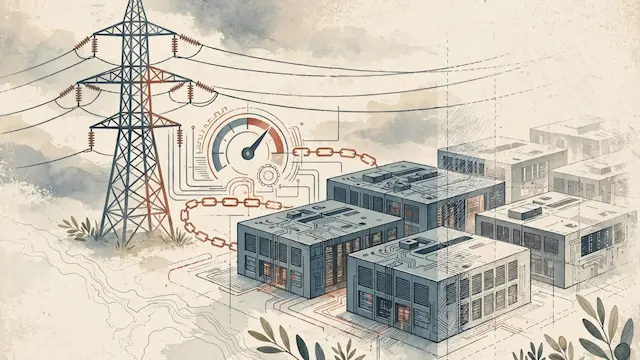
Israel's Electricity Authority is set to cap the maximum power for new data center "server farms" at 200 megawatts, according to sources familiar with the matter. A decision to regulate the connection of these facilities is expected to be published for public comment on Sunday. This move comes as the cumulative electricity consumption of data centers is projected to reach approximately 20% of Israel's total electricity usage by 2030. The power capacity of a data center determines its data processing and AI model training capabilities, driven by processor consumption and cooling systems.
While 200MW is substantial, numerous applications for larger facilities have already been submitted. Mega DC, owned by Zachi Nachmias, seeks to build a 1,100MW farm in Hadera, and SDS, controlled by Yossi Shinfield, applied for an 875MW facility in Nesher. These and similar large-scale projects would not be approved under the new regulations. The 200MW limit is intended to allow for more data centers while also protecting the national grid, as the failure of a high-capacity farm could cause widespread power disruptions.
The global demand for AI-driven data centers has spurred a race among Israeli developers. However, the sheer volume of connection requests, totaling 27,000MW, far exceeds Israel's current electricity generation capacity of 18,800MW. This demand is problematic because, unlike other heavy energy consumers, data centers cannot be shut down and have constant, inflexible energy needs, unlike factories or desalination plants.
Following a 140-day halt on processing new data center applications in June, the Electricity Authority conducted internal reviews. The upcoming regulation, after a three-week public comment period, will not impose geographical restrictions on data center locations. However, Noga, the system management company, may find it easier to approve applications in peripheral areas where their impact on other consumers is less significant. The plan is also expected to prevent data centers from connecting directly to power plants, bypassing the national grid, to ensure power generation serves the public.
Industry insiders note that while the 200MW limit is reasonable given current infrastructure and supply constraints, the immense global demand, exacerbated by difficulties in building data centers in the US and Europe, makes Israel an attractive location. Factors contributing to this include lower electricity prices compared to the US and Israel's expertise in building protected facilities, which have become strategic assets following recent attacks on data centers elsewhere.
Despite the regulations, data centers will significantly increase Israel's electricity demand, necessitating more power generation, likely from natural gas, leading to higher air pollution and greenhouse gas emissions. Projections vary, with Noga estimating a 3.5% annual increase in electricity consumption over the coming decades (sharper in the immediate years), while the Dayan Committee estimated a maximum of 3.2%. A third forecast from private power producers suggests a 4.2% annual growth, potentially doubling electricity consumption within 15 years, with data centers alone consuming 7 billion kWh annually by 2030.
Mentioned
The same event, reported separately by each outlet. Open a few to compare what different newsrooms emphasize — and what they leave out.
Other 3


Not the same event — other stories that share this one’s people, places, or theme: background, reactions, and follow-ups.

