
Israel to Cap Server Farm Power to 200 Megawatts Amid Electricity Shortage
Translated & summarized from Bizportal by baba
Israel's Electricity Authority will cap new server farms at 200 megawatts due to overwhelming demand for electricity from AI and cloud companies. Noga received requests for 27,000 MW, far exceeding the national peak demand. New regulations will limit farm sizes, and projects may need to be scaled down or relocated. The move aims to manage grid capacity and ensure reliable power supply, with significant investments planned for infrastructure upgrades.
The story in 6 lines · by baba
- Israel's Electricity Authority will limit new server farms to 200 MW due to massive electricity demand.
- Noga received requests for 27,000 MW of power, significantly exceeding Israel's peak demand.
- Current operational server farms consume 400 MW, while new requests far surpass available capacity.
- New regulations follow a 140-day freeze on applications over 8 MW to assess grid capabilities.
- AI server farms are major electricity consumers, with one 200 MW facility using over 2% of Israel's annual power.
- Significant investments are planned for grid upgrades and increased conventional power generation.
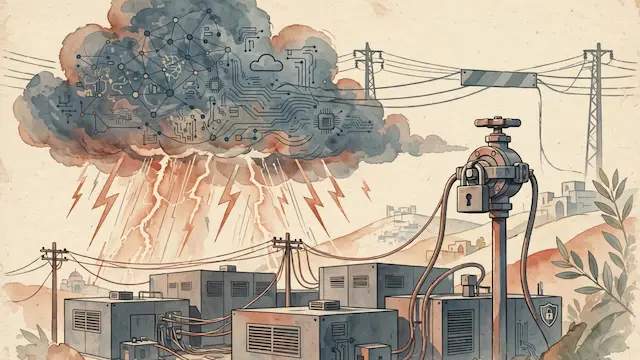
Israel's Electricity Authority is set to implement new regulations limiting new server farms to a maximum of 200 megawatts (MW) of electricity. This move comes as the national electricity company, Noga, has received approximately 100 requests for server farm connections totaling around 27,000 MW, far exceeding Israel's peak electricity demand of 17,300 MW. Currently, operational server farms consume about 400 MW.
The proposed regulations, which will be open for public comment for three weeks, aim to manage the overwhelming demand for power from AI and cloud companies. Roughly half of the pending requests are for facilities requiring more than 200 MW, with some seeking gigawatts or more. These projects will need to be scaled down or split across multiple locations. Industry estimates suggest the new framework could accommodate up to 15 server farms at the maximum capacity, totaling around 3,000 MW, which is double the 1,500 MW already committed.
The Electricity Authority's decision follows a 140-day freeze on new server farm applications exceeding 8 MW, implemented to reassess demand and grid capacity. The freeze, ending in early December, allowed for an examination of supply reliability, redundancy, competition, future electricity prices, and gas consumption. A mechanism is also being developed to differentiate serious projects from speculative ones.
The challenge stems from the difference between installed generation capacity and the ability to supply electricity at any given moment. While Israel's installed capacity is 24.6 gigawatts (GW) in 2024, intermittent sources like solar power fluctuate, and conventional power plants require maintenance. A single 200 MW AI server farm operating 24/7 can consume over 2% of Israel's total annual electricity usage.
To address the growing demand, the Authority plans to increase conventional power generation capacity to 18.9 GW by 2030 and promote over 9,000 MW of energy storage. Significant investments, approximately 90 billion shekels, are allocated for grid infrastructure and energy development through 2031. The government's decision 3907 also designates large AI server farms as national infrastructure, prioritizing projects in the southern Negev region, which has more renewable energy capacity. However, connecting new facilities to the national grid could take up to six years, potentially deterring international companies.
The same event, reported separately by each outlet. Open a few to compare what different newsrooms emphasize — and what they leave out.
Other 2

Not the same event — other stories that share this one’s people, places, or theme: background, reactions, and follow-ups.




