
Israel to Allow Data Centers Amid Strained Power Grid
Translated & summarized from Calcalist by baba
Israel's Electricity Authority will soon allow new data centers to connect to the national grid under new regulations, despite record-breaking electricity consumption and a strained power infrastructure. Each data center will be limited to 200 megawatts of consumption, with up to 15 facilities potentially being approved. This move aims to balance the need for advanced computing infrastructure with the limitations of the existing power grid, while also considering national security and economic competitiveness.
The story in 5 lines · by baba
- Israel's Electricity Authority will allow data centers to connect to the grid under new regulations.
- New regulations cap each data center's electricity consumption at 200 megawatts.
- Data centers are projected to consume up to 20% of Israel's electricity by 2030.
- The national electricity grid reached a new record consumption of 17,282 megawatts in August 2025.
- Local data centers are considered crucial for Israel's technological competitiveness and national security.
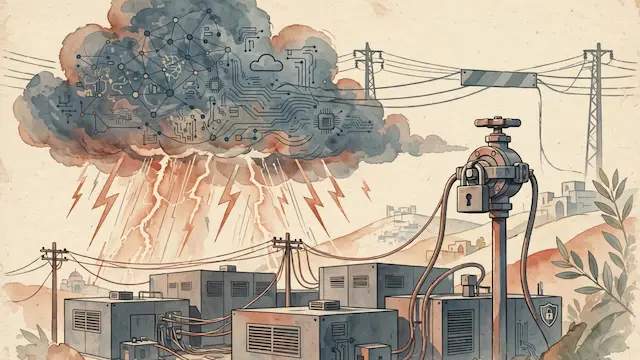
Israel's electricity grid is facing unprecedented strain, with a new record for electricity consumption set in August 2025, reaching 17,282 megawatts. This figure represents a 10% increase from the previous record set just two years prior, while the country's current electricity generation capacity stands at only 18,800 megawatts. Despite these challenges, the Electricity Authority is expected to publish regulations today that will permit the connection of data centers, energy-intensive facilities, to the national grid.
According to the Electricity Authority's load forecast, data centers are projected to consume up to 20% of Israel's total electricity by 2030. In response to growing demand and grid limitations, the authority had previously halted approvals for new data center projects in July. The new compromise regulation will allow the market to continue developing data centers while imposing restrictions to protect the infrastructure.
Each data center's electricity consumption will be capped at 200 megawatts, a level comparable to the consumption of a medium-sized Israeli city like Rehovot or Holon. It is estimated that up to 15 such facilities, each at the maximum capacity of 200 megawatts, could be established. This limitation addresses half of the 100 connection requests submitted to Noga, the system operator.
Industry insiders note that electricity generation is a significant hurdle, citing the difficulty in establishing new power plants in Israel and political reluctance to make such decisions. However, they also point to the transmission grid as a more severe constraint, with existing issues in central Israel. This situation presents an opportunity in the periphery, particularly in the Negev, where renewable energy sources could power local data centers instead of being transmitted northward.
The operational pattern of data centers, which run 24/7, adds a significant base load to the system, unlike the more balanced consumption patterns of residential and commercial areas. This increased demand for electricity will also impact natural gas consumption, potentially depleting reserves faster than projected and increasing air pollution. Shali Lantzman, a partner at NED, emphasizes the strategic importance of local data centers for Israel's technological competitiveness and national security, comparing their significance to that of power plants or airports. She highlights the need for local data infrastructure to protect sensitive national security and personal data, citing an incident where Microsoft blocked access for Unit 8200 to cloud services due to alleged misuse for intelligence gathering on Palestinians.
Furthermore, robust data center infrastructure is seen as a significant advantage for startups and a draw for international companies, contributing to Israel's economic and security standing, which relies heavily on technological superiority. The global race for computing power and related resources makes local data centers a critical national interest.
Mentioned
The same event, reported separately by each outlet. Open a few to compare what different newsrooms emphasize — and what they leave out.
Other 2

Not the same event — other stories that share this one’s people, places, or theme: background, reactions, and follow-ups.



