
Iran, US Exchange Missile, Naval Strikes Amid Escalating Mideast Tensions
Translated & summarized from Alarab by baba
Iran and the U.S. have engaged in direct missile and naval strikes, with Iran attacking a U.S. base in Jordan and the U.S. destroying Iranian oil tankers. The conflict has expanded with air defense activity over Israel, raising concerns of a wider regional confrontation.
The story in 6 lines · by baba
- Iran and U.S. exchange direct missile and naval strikes.
- Iran attacked a U.S. base in Jordan in retaliation.
- U.S. destroyed five Iranian oil tankers in response.
- Iran threatened further attacks on tankers in Kuwait and Bahrain.
- Air defense activity was detected over Israel, widening the conflict.
- Tensions suggest a potential for broader regional confrontation.
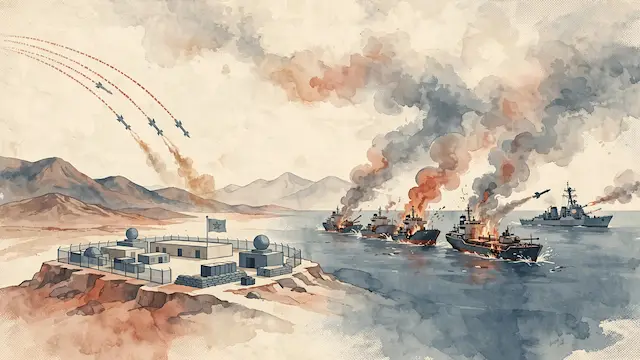
The Middle East is experiencing a new wave of tension as the confrontation between Iran and the United States has escalated to direct strikes on land and sea. The Iranian Revolutionary Guard Corps announced it launched missiles at a U.S. base in the Al-Azraq region of Jordan, stating the attack was retaliation for U.S. strikes on Iranian oil tankers. Iran also threatened to target tankers in Kuwait and Bahrain, increasing risks in a vital energy shipping corridor.
In response, U.S. Central Command announced the destruction of five Iranian oil tankers following two Iranian attempts to target a U.S. warship with ballistic missiles. Four tankers were hit in the Gulf of Oman and one near Kharg Island after their crews were evacuated. Washington asserts these tankers are part of a funding network for the Revolutionary Guard.
U.S. statements, including a warning from Secretary of State Marco Rubio that "every attempt to target U.S. Navy ships will be met with the loss of oil tankers," indicate a shift towards a new deterrence strategy targeting Iran's economic infrastructure. Iran, however, maintains it will directly retaliate against any targeting of its interests.
The escalation is not confined to Iran and the U.S. Air defense interceptions were detected over Israel, suggesting a widening conflict zone and the potential for a broader regional confrontation if either side miscalculates. The recent developments reveal an open struggle for naval and military influence in the region, with each side attempting to establish new rules of engagement. With intersecting lines of contact, the Middle East faces a sensitive phase that could lead to further escalation or a temporary de-escalation, depending on the calculations of both parties.
Mentioned
The same event, reported separately by each outlet. Open a few to compare what different newsrooms emphasize — and what they leave out.
Left 1Centre 3Right 2Haredi 2Arab 1Other 3