Israel's Education System Falls Short of OECD Standards, PISA Data Reveals
Translated & summarized from Maariv by baba
A PISA 2025 report reveals 29% of Israeli students lack basic proficiency in science, reading, and math, falling short of OECD standards. The findings necessitate significant reforms in teaching methods and teacher training to improve student outcomes.
The story in 6 lines · by baba
- 29% of Israeli students fail to meet basic PISA standards in key subjects.
- The decline in performance began before recent national crises.
- Report urges focus on deep understanding and critical thinking skills.
- Teacher-student support is linked to improved student mindset and effort.
- Teacher training must incorporate diagnostic and feedback skills.
- Proposed reforms aim to leverage PISA data for educational improvement.
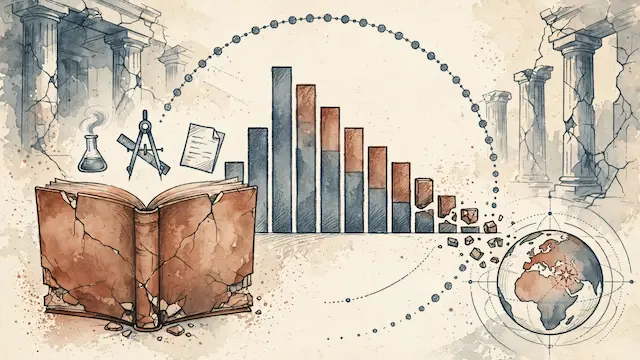
A recent report based on PISA 2025 data highlights a significant gap between Israeli students' academic performance and the standards set by the Organization for Economic Co-operation and Development (OECD). The findings indicate that 29% of Israeli students do not meet the basic proficiency level in science, reading, and mathematics, with this decline predating recent crises.
The report, authored by Dr. Nurit Hochberg, emphasizes the need for deep changes in teaching methods and teacher training. It recommends prioritizing depth over breadth in education, ensuring fundamental concepts are understood thoroughly, strengthening literacy across all subjects, and teaching students to critically evaluate information and sources, especially in the age of artificial intelligence.
Furthermore, the study underscores the crucial role of the teacher-student relationship. Students who reported receiving more frequent support and encouragement to persevere through difficulties tended to exhibit more growth mindsets and a stronger belief in their ability to improve through effort. This suggests teachers act not just as knowledge transmitters but as facilitators of challenges, providing meaning to feedback and fostering a sense of capability.
To address these issues, the report calls for a transformation in teacher training. Aspiring educators need practical experience in diagnosing student understanding, adapting explanations, and providing feedback that encourages persistence. The proposed model includes a sequence of training, clinical experience, mentorship, and practice-based research, aiming to leverage the PISA 2025 data as a catalyst for genuine improvement in the education system.
The same event, reported separately by each outlet. Open a few to compare what different newsrooms emphasize — and what they leave out.
Left 2Centre 9Right 3Arab 3Other 9





























Not the same event — other stories that share this one’s people, places, or theme: background, reactions, and follow-ups.