PISA Test Results Show Sharp Decline in Israeli Education System
Translated & summarized from Kan News by baba
International PISA test results show a sharp decline in Israeli students' performance in reading, science, and math, reaching historic lows and significantly below OECD averages. The results, collected during the ongoing conflict, reflect a crisis in the education system, with significant drops in scores compared to 2022.
The story in 6 lines · by baba
- Israeli students show sharp declines in PISA reading, science, and math scores.
- Reading comprehension reached a historic low, dropping 38 points since 2022.
- Science and math scores also fell significantly below OECD averages.
- The results reflect a crisis in the education system, exacerbated by the war.
- Significant gaps exist between students from different socioeconomic backgrounds.
- Education Minister Kisch acknowledged anticipated poor results due to the war.
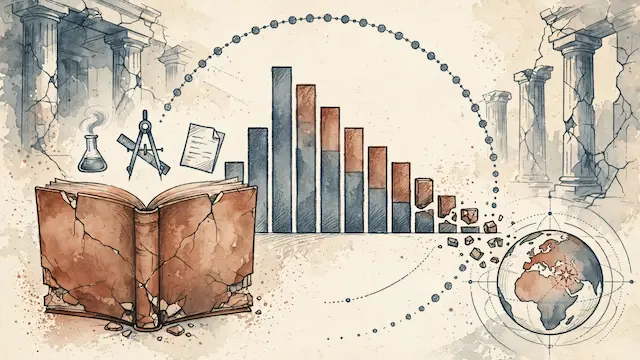
International PISA test results released Tuesday reveal a significant decline in Israeli students' performance in science and math, alongside a historic low in reading comprehension. The 2025 test data indicates a major crisis in the education system over recent years, with Israel experiencing one of the sharpest overall drops among participating countries between 2022 and 2025. The tests, which assessed 14-year-old students in ninth and tenth grades, are seen as a failing grade for the education system's ability to cope with the challenges of the ongoing conflict.
Compared to 2022 results, prior to the October 7th attacks, Israeli students dropped seven places globally in reading, losing 38 points, equivalent to two years of learning. The average score was 436, compared to the international average of 463. In science, Israel fell eight places since 2022, scoring 442 points, well below the OECD average of 484. The country is listed among those with the most severe declines in science, alongside Guatemala, Hong Kong, and Latvia. Math scores also saw a decrease of six places and 25 points, placing Israel with countries like Latvia and Serbia, and significantly below the average of 465 with a score of 433.
In relation to OECD countries specifically, Israel now ranks 31st out of 38 in reading, 33rd out of 38 in science, and 33rd out of 38 in math. The report also highlighted that Israeli students ranked second among developed nations in feeling that school is a "waste of time." Half of Israeli principals reported that teaching has been negatively impacted by teacher shortages. Only 8.8% of Israeli students were classified as "gifted," below the OECD average of 11.9%, while 29% were classified as "weak," significantly above the 19.7% average. A substantial 82-point gap exists between students from economically advantaged and disadvantaged backgrounds.
Girls generally outperformed boys in science and reading, with an average score of 449 versus 435 for boys in science, and 455 versus 417 in reading, respectively. Math scores were nearly equal, with a slight advantage for boys. Both boys and girls experienced sharp declines in all subjects, with boys seeing a 29-point drop in science and 46 points in reading, and girls experiencing drops of over 30 points in reading and over 20 points in math. These declines are among the largest recorded in the study sample.
Education Minister Yoav Kisch acknowledged the expected poor results, stating in a March 2025 interview that the data was collected mid-war and the consequences were anticipated. He admitted that the results would be negatively impacted and likely lower than previous years.
The same event, reported separately by each outlet. Open a few to compare what different newsrooms emphasize — and what they leave out.
Left 2Centre 9Right 3Arab 3Other 9