Israel to Cut Fuel Tax by Half a Shekel Amid Price Surge
Translated & summarized from Bizportal by baba
Israel will reduce the price of gasoline by half a shekel per liter starting at midnight, bringing the cost to NIS 7.75, due to a cut in excise tax. This measure aims to alleviate a significant price increase experienced throughout the year, though prices will remain higher than at the start of 2024.
The story in 6 lines · by baba
- Gasoline prices in Israel to drop by 0.50 shekels per liter.
- New maximum price for 95-octane gasoline will be 7.75 shekels.
- Reduction is due to a Finance Ministry decision to lower excise tax.
- Prices rose significantly throughout 2024, partly due to global factors.
- The cut partially offsets recent price increases but not all.
- The measure may impact inflation and interest rate decisions.
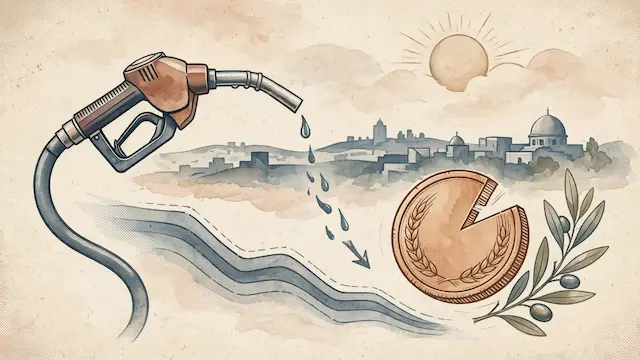
The maximum price for a liter of 95-octane self-service gasoline in Israel will decrease by half a shekel, to NIS 7.75, starting at midnight. This reduction follows a recent price peak and comes after Finance Minister Bezalel Smotrich decided to lower the excise tax on fuel by 50 agorot per liter. The move received legal approval despite initial questions about implementing tax cuts during an election period, as the government is operating under transitional restrictions.
Despite the constraints, the Finance Ministry's legal advisor, Dudi Koppel, supported the measure, arguing that high fuel prices justified swift action. He noted that this reduction is smaller in scope and duration compared to a similar tax cut implemented during the 2022 election period. Smotrich is expected to sign the order enabling the price drop.
The tax cut addresses a significant increase in fuel prices since the beginning of the year. In January, a liter of gasoline cost NIS 6.85, rising by approximately NIS 1.40 to NIS 8.25 by September. This surge was partly attributed to global energy market increases linked to the conflict with Iran and the closure of the Strait of Hormuz.
Even with the reduction, gasoline prices will remain about 90 agorot higher than at the start of the year, recovering only a portion of the recent increase. The tax reduction applies only to gasoline, whose prices are regulated in Israel; diesel and LPG prices are not controlled and are therefore unaffected.
The fuel price decrease could also impact the consumer price index. Fuel, along with charging and oils, constitutes about 2.6% of the index. A roughly 6% drop in gasoline prices might lower the index by approximately 0.15 to 0.16 percentage points in the month the reduction is fully reflected. This development could support moderating inflation and potentially further interest rate cuts by the Bank of Israel, depending on other economic indicators.
The same event, reported separately by each outlet. Open a few to compare what different newsrooms emphasize — and what they leave out.
Left 2Centre 4Right 5Haredi 3Arab 5Other 9