
Israeli Stock Market Plummets Amid Election Uncertainty, Dollar Surges
Translated & summarized from Mako by baba
Israel's stock market plunged following unclear election results, signaling political instability and economic uncertainty. The real estate sector was particularly hard-hit, with indices falling nearly 8% due to interest rate sensitivity and expected government inaction. The US dollar surged against the shekel as investors sought safety, impacting import costs for consumers and boosting exporters.
The story in 5 lines · by baba
- Israeli stock indices plummeted due to election uncertainty, with TA-35 down 2.34%.
- Real estate and construction sectors crashed by nearly 8% amid interest rate concerns.
- The US dollar strengthened against the shekel, reaching 3.10, impacting import costs.
- Global markets await US Federal Reserve interest rate decisions and tech giant earnings.
- Political paralysis is expected to hinder government action on the housing crisis.
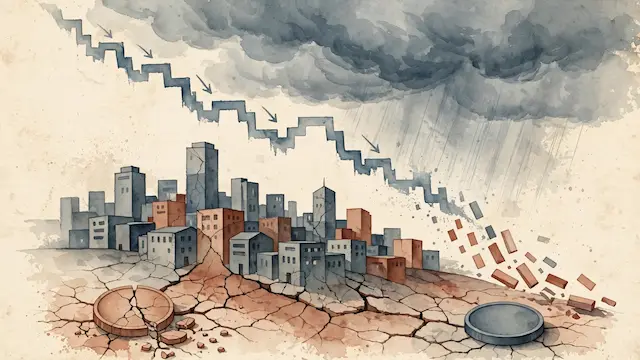
The Tel Aviv Stock Exchange experienced a significant downturn following the unclear election results, which indicate a likely political stalemate. Investors reacted with panic, causing major indices to fall. The TA-35 index dropped by approximately 2.34%, the TA-125 by 2.8%, and the TA-90 by 4.13%. This decline is attributed to the economic aversion to uncertainty and the prospect of political paralysis hindering governmental decision-making.
The real estate and construction sectors were hit hardest, with their indices plummeting by nearly 8%. Major real estate companies saw their stocks fall by over 10%, and related sectors like banking and insurance also experienced significant drops. This vulnerability is linked to the sector's heavy reliance on loans and financing, making it highly sensitive to interest rate hikes. The political deadlock is expected to prevent swift action on the housing crisis or budget approvals, while anticipated interest rate increases in the US and globally will make it difficult for the Bank of Israel to lower rates locally, further burdening real estate firms.
Simultaneously, global markets are bracing for crucial decisions from the US Federal Reserve. While the Fed is expected to hold interest rates steady, the chairman's subsequent speech will be closely watched for any hints about future rate hikes, given persistent inflation and rising fuel prices. Any indication of further increases could pressure markets, raise borrowing costs, and negatively impact tech and leveraged companies. Conversely, signals that rates have peaked could boost growth stocks and the real estate sector.
Adding to the volatility, major tech giants Microsoft and Google are set to release their financial reports after the US market close. Investors will be scrutinizing these reports for evidence that massive investments are finally yielding profits, particularly for Google, which needs to demonstrate the resilience of its business model amidst the rise of AI chatbots.
The US dollar also saw a sharp increase against the Israeli shekel, reversing yesterday's gains. The dollar climbed to around 3.10 shekels, reflecting investor flight to safety amid the political uncertainty. This strengthens the dollar for Israeli exporters, especially in the tech and defense industries, while making imports, foreign travel, and online purchases more expensive for Israeli consumers, potentially fueling inflation.
The same event, reported separately by each outlet. Open a few to compare what different newsrooms emphasize — and what they leave out.
Centre 3Right 1Other 1





Not the same event — other stories that share this one’s people, places, or theme: background, reactions, and follow-ups.


