
Israeli Markets Brace for Economic Paralysis Amid Political Uncertainty
Translated & summarized from Walla by baba
The Tel Aviv Stock Exchange fell sharply after elections due to fears of political deadlock and economic paralysis, reversing earlier dollar weakness. Leading indices dropped, and the shekel weakened against the dollar as investors worried about the inability to form a stable government. Experts predict market stagnation for at least another week and advise investors to ensure portfolio diversification and potentially reduce local market exposure.
The story in 5 lines · by baba
- Israeli markets plunged amid fears of political deadlock and economic paralysis following elections.
- The banking index dropped about 4%, and the shekel weakened against the dollar.
- Investors are concerned about the inability to form a stable government for economic decision-making.
- Market stagnation is expected to continue for at least another week.
- Experts advise investors to diversify portfolios and consider reducing local market exposure.
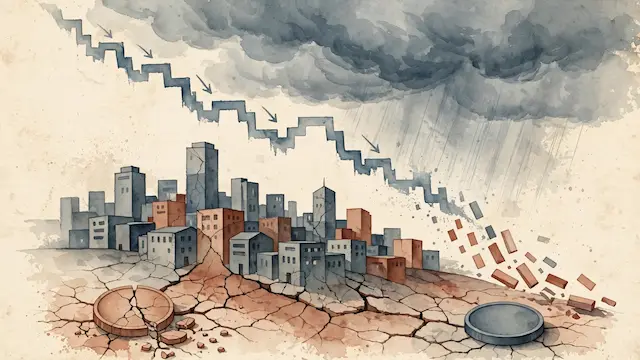
The Tel Aviv Stock Exchange experienced significant declines on the day following elections, reversing earlier optimism that had seen the dollar weaken. Investors are now expressing concern over a potential political deadlock, which could lead to prolonged economic stagnation in Israel. Leading indices saw sharp drops, with the banking index losing approximately 4%. The foreign exchange market also reversed trends, with the shekel weakening against the dollar.
Market participants had hoped for election results that would enable the formation of a stable government capable of making difficult economic decisions. However, the current uncertainty means that no party is likely to be able to implement the necessary fiscal measures for economic recovery and growth. She noted that while the vote count itself isn't catastrophic, the inability to form a functional government is the primary concern.
Alkalay warned that the market is not currently pricing in risks such as potential sanctions expected on November 20th, or the possibility of war escalation. She indicated that the current market stagnation is likely to persist for at least another week, possibly longer. The currency markets are also expected to be volatile, with the risk premium on the shekel-dollar exchange rate having risen and potentially increasing further.
For investors, Alkalay advised maintaining a properly diversified portfolio. Those with unbalanced holdings, such as too much exposure to stocks over bonds or an over-reliance on Israeli equities compared to international ones, should rebalance. Short-term traders were cautioned to reduce their exposure to the local market due to the increased risk premium for Israel.
The same event, reported separately by each outlet. Open a few to compare what different newsrooms emphasize — and what they leave out.
Centre 2Right 1Other 1



Not the same event — other stories that share this one’s people, places, or theme: background, reactions, and follow-ups.


