
Israeli Stock Market Falls Sharply After Election Uncertainty
Translated & summarized from Bizportal by baba
The Tel Aviv Stock Exchange saw sharp declines in real estate and construction stocks following Israeli elections, as investors' hopes for political certainty and lower interest rates were dashed by unclear results. The market had rallied in anticipation of a new government, but the prospect of prolonged coalition talks has led to investor caution. This uncertainty impacts the sensitive real estate sector, which relies on low interest rates and economic stability, and raises concerns about the government's ability to manage budget challenges.
The story in 5 lines · by baba
- Israeli stock market, especially real estate and construction, fell sharply after unclear election results.
- Investors had bet on a political shift to bring economic certainty and lower interest rates.
- The election outcome points to prolonged coalition negotiations, increasing investor uncertainty.
- Real estate and construction sectors are highly sensitive to interest rates and economic stability.
- Political uncertainty may hinder the Bank of Israel's ability to lower interest rates.
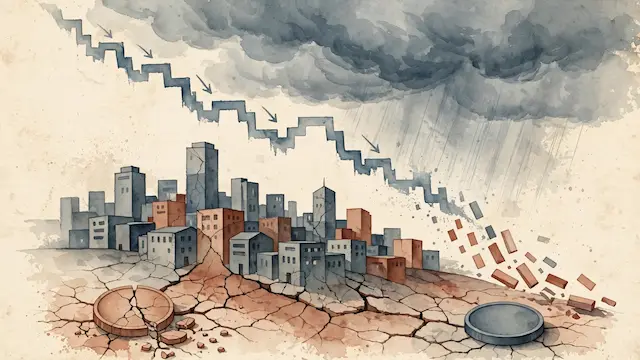
The Tel Aviv Stock Exchange experienced significant declines the day after Israelis went to the polls, with real estate and construction stocks facing heavy pressure. Investors had anticipated a political shift that would bring economic certainty and potentially lower interest rates, but the election results have created a scenario of prolonged coalition negotiations and potential repeat elections, leading to a reassessment by investors.
At the market's opening, the TA-Construction index dropped approximately 5.5%, and the TA-Real Estate index fell by about 4.6%. These drops followed a substantial rally in these sectors in the weeks leading up to the election, driven by expectations of a new government that would restore economic confidence and enable the Bank of Israel to continue reducing interest rates.
The real estate and construction sectors are particularly sensitive to interest rate changes. Lower rates make mortgages more affordable, boost purchasing power, and reduce financing costs for construction companies. Conversely, higher rates have the opposite effect, exacerbating existing challenges like weak housing sales and high financing costs for developers.
Investors had bet on a scenario where a new government would stabilize the political and legal landscape, encourage investment, and revive economic activity. This optimism was reflected in the TA-Construction index's 8% rise in the month prior to the election, significantly outperforming broader market indices. This rally was fueled by survey results suggesting a potential shift in the political balance.
However, the election outcomes did not produce a clear majority, with preliminary results showing the Netanyahu bloc leading but without the 61 seats needed to form a government. This uncertainty has led investors to fear a prolonged period of political paralysis, which could weaken the shekel, increase budget uncertainty, and create inflationary pressures, making it difficult for the Bank of Israel to lower interest rates. In a worst-case scenario, a significant rise in inflation could even lead to an interest rate hike.
Beyond interest rates, the next government will face significant budget challenges due to war expenses, increased defense spending, and rising public debt. A stable government could present a clear economic plan, but a prolonged political deadlock or caretaker government might struggle to provide the necessary certainty, potentially impacting Israel's credit rating and increasing borrowing costs. This fiscal uncertainty could further complicate the central bank's ability to ease monetary policy.
The same event, reported separately by each outlet. Open a few to compare what different newsrooms emphasize — and what they leave out.
Centre 2Right 1Other 1



Not the same event — other stories that share this one’s people, places, or theme: background, reactions, and follow-ups.


