
Election Results Shock Investors, Triggering Market Plunge and Dollar Surge
Translated & summarized from Globes by baba
Israel's stock market plunged and the dollar surged against the shekel following the recent election results, which indicated a political stalemate. Investors' pre-election optimism, which had driven market gains and shekel strengthening, quickly dissipated as uncertainty about government formation grew. Key sectors like real estate were heavily impacted, while dual-listed global companies offered a relative safe haven. Market participants are now focused on the need for political stability to prevent further downturns and attract investment.
The story in 6 lines · by baba
- Israeli stock market indices plummeted and the dollar surged following the country's recent election results.
- Investor optimism prior to the election led to market rallies and shekel strengthening, which reversed post-results.
- Political uncertainty and the potential for governmental paralysis are major concerns for the Israeli market.
- Real estate and construction sectors, previously strong, suffered the most significant losses.
- Dual-listed companies with global operations provided a relative safe haven for investors.
- Market participants prioritize political stability over economic data for market recovery.
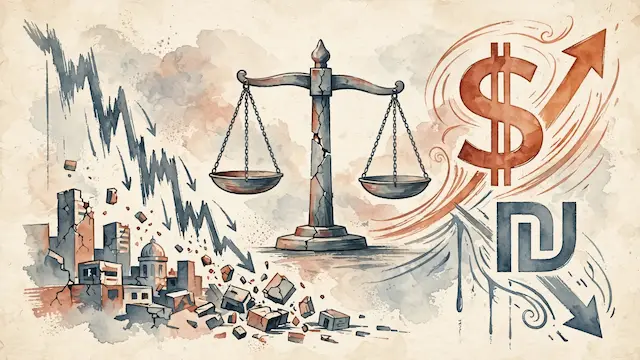
Following the recent Israeli elections, the local stock market experienced a significant downturn, with major indices plummeting and erasing earlier gains. This sharp decline, described by market insiders as a "wishful thinking" approach, coincided with the release of election results. The Tel Aviv Stock Exchange saw its worst trading day in months, with the "fear index" spiking 30% and long-term government bonds falling.
Investor optimism had been high in the days leading up to the election, with the market rallying on expectations of a "change bloc" victory. The shekel also strengthened against the dollar based on early indications of high voter turnout, which investors interpreted as favorable to the change bloc. However, as the actual results became clear, this optimism evaporated, leading to a rapid depreciation of the shekel against the dollar.
The election outcome, indicating a political stalemate and the potential for prolonged governmental paralysis, fueled investor fears. Concerns include the inability to pass a state budget, delays in infrastructure development projects, and a continued freeze in the housing market. Foreign investors, who had remained in the market hoping for a different government to mitigate international sanctions, also grew apprehensive.
Sectors that had previously led the market's rise, such as real estate and construction, were hit hardest. Real estate stocks erased their monthly gains, and the TA-90 index, with its high exposure to local companies and construction firms, also suffered. The Bank of Israel's recent decision to maintain interest rates, coupled with the political uncertainty, has diminished hopes for monetary easing, increasing financing costs for leveraged real estate companies and further dampening the housing market.
In contrast, dual-listed stocks with global operations, particularly in the tech and cyber sectors, performed better. These stocks were seen as a safer haven, and some benefited from positive arbitrage gaps after trading resumed following a holiday. The renewed surge in the dollar against the shekel also positively impacted these companies, increasing the value of their dollar-denominated assets and revenues when converted to shekels.
Market managers emphasized that while the optimism has subsided, current valuations do not reflect a catastrophe. The primary concern remains political uncertainty, which investors fear more than negative news. The possibility of forming a stable, functioning government is seen as crucial for market recovery. Some investors believe that external pressure, potentially from U.S. President Donald Trump, could lead to a broad unity government, which would be highly beneficial for the stock market. However, prolonged political deadlock and the prospect of repeat elections are expected to continue depressing the market.
Mentioned
The same event, reported separately by each outlet. Open a few to compare what different newsrooms emphasize — and what they leave out.
Centre 1Other 3



Not the same event — other stories that share this one’s people, places, or theme: background, reactions, and follow-ups.


