
Turkey-Libya Maritime Deal Sparks Regional Outcry and Delays Energy Projects
Translated & summarized from Cursorinfo by baba
Turkey's maritime agreement with Libya, approved by the Libyan parliament, has drawn sharp condemnation from Egypt, Israel, Greece, Cyprus, and the European Union. The deal, which defines maritime boundaries and impacts energy resource rights, is seen by opponents as violating international law and infringing on regional states' interests. The dispute has led to delays in energy infrastructure projects like the Great Sea Interconnector and prompted a joint meeting between the leaders of Israel, Greece, and Cyprus.
The story in 5 lines · by baba
- Turkey-Libya maritime deal approval sparks condemnation from Egypt, Israel, Greece, Cyprus, and the EU.
- Egypt and Israel declare the Turkey-Libya maritime deal invalid and a violation of international law.
- The maritime agreement impacts potential oil and gas exploration and regional energy infrastructure projects.
- Israel, Greece, and Cyprus leaders are holding a joint meeting amidst escalating regional tensions.
- The dispute over maritime borders has led to competing agreements and project delays.
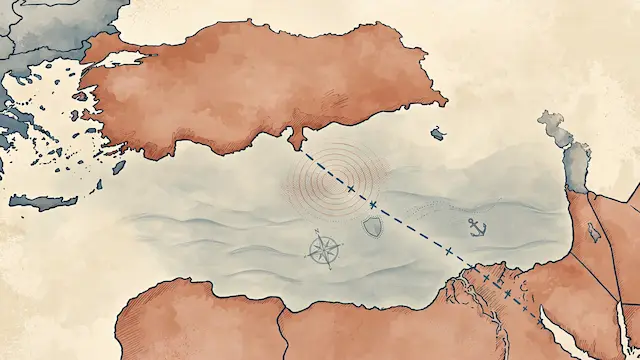
A maritime agreement between Turkey and Libya, recently approved by the Libyan House of Representatives, has reignited disputes over maritime borders and energy resources in the Eastern Mediterranean. Egypt and Israel have strongly condemned the deal, joining earlier protests from Greece, Cyprus, and the European Union. Turkey frames the agreement as a protection of its interests and Libya's rights, while opponents argue it infringes on regional states' rights and exacerbates disagreements.
The memorandum, initially signed in November 2019 between Turkey and the Tripoli-based government, gained new political backing when the eastern Libyan parliament unanimously approved it, reversing previous rejections. This move strengthens Turkey's position on maritime demarcation within Libya.
Egypt's Foreign Ministry declared the memorandum "invalid and without legal effect," asserting it violates international maritime law and infringes on Egypt's sovereign rights in its exclusive economic zone. Cairo reserves the right to protect its interests against any actions based on the deal.
Israel's Foreign Ministry called the decision "unacceptable," stating it affects the sovereign rights of Israel's "close allies" in the region and criticized Turkey for undermining stability. While Israel condemned the deal, its focus was on protecting allies' interests rather than directly claiming the agreement impacts its own gas fields.
The core of the conflict lies in the division of economic rights to maritime territories. The memorandum defines exclusive economic zones and continental shelves, impacting potential oil and gas exploration. Greece argues the defined border disregards the maritime rights of its islands and that Turkey and Libya's coastlines do not justify the established boundary. Athens has informed partners and plans to take measures to protect its rights.
In response to these tensions, Israeli Prime Minister Benjamin Netanyahu, Greek Prime Minister Kyriakos Mitsotakis, and Cypriot President Nikos Christodoulides are holding a joint meeting in Jerusalem. Meanwhile, a competing 2020 agreement between Greece and Egypt covers some of the same maritime areas, which Ankara opposes.
The dispute also impacts regional energy infrastructure, specifically the Great Sea Interconnector project, a planned electricity cable linking Greece, Cyprus, and Israel. Project implementation is reportedly delayed due to disagreements with Turkey over seabed survey areas. Turkish Foreign Minister Hakan Fidan indicated Turkey would not object to surveys if provided with prior written notification and coordinates, suggesting a potential path forward for infrastructure projects despite the unresolved legal dispute.
Turkey welcomed the Libyan vote, maintaining the memorandum aligns with international law and has been in effect since 2019. The EU reiterated its stance that the memorandum is invalid and creates no legal consequences for other states. The UN's registration of the agreement does not confirm its legal validity.
Mentioned
The same event, reported separately by each outlet. Open a few to compare what different newsrooms emphasize — and what they leave out.
Centre 4Right 1Other 3








Not the same event — other stories that share this one’s people, places, or theme: background, reactions, and follow-ups.


