
Turkey-Libya Maritime Deal Could Hamper Israel's Energy Infrastructure Plans
Translated & summarized from Maariv by baba
Israel's energy infrastructure plans are at risk due to a maritime border agreement between Turkey and eastern Libya, approved by the Libyan parliament. The deal could hinder Israel's connection to the European energy grid via Cyprus and Greece, potentially delaying electricity imports and exports. Greece has rejected the agreement, deeming it a violation of maritime law, while Turkey has welcomed it. The situation is seen as a diplomatic victory for Turkey, strengthening its maritime claims.
The story in 5 lines · by baba
- Turkey-Libya maritime deal may complicate Israel's energy infrastructure plans with Europe.
- The agreement could delay Israel's electricity import and export capabilities.
- Greece rejects the deal, calling it a violation of international maritime law.
- Turkey views the agreement as a significant diplomatic achievement strengthening its maritime claims.
- The deal follows warming ties between Turkey and the Haftar camp in Libya.
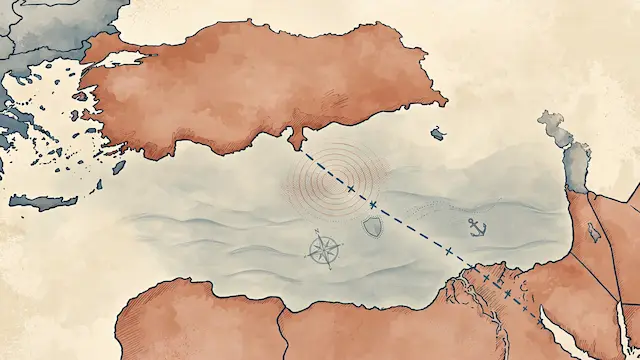
Israel's plans to connect to European energy infrastructure via Cyprus and Greece could be complicated by a maritime border agreement recently approved by the parliament in eastern Libya and signed with Turkey. The deal may impact a planned electricity cable intended to link Israel to the European grid. Ankara claims part of the cable's route falls within its jurisdiction and requires prior coordination for seabed surveys.
The parliamentary approval in eastern Libya strengthens Turkey's political position and could lead to demands that delay work, increase project costs, and deter investors. This could postpone Israel's options for importing and exporting electricity, potentially increasing its reliance on U.S. and European support. However, the agreement does not grant Turkey automatic rights to block Israeli shipping, nor does it definitively resolve legal disputes over maritime borders and rights in contested areas.
The agreement follows a period of warming relations between Ankara and the Haftar camp in Libya, evidenced by Turkish official visits and investments, after Turkish military support helped thwart Haftar's 2019-2020 offensive on Tripoli. Analysts describe the decision as a significant reversal and suggest it could lead to an expanded Turkish military presence in eastern Libya.
Greece has rejected the Libyan parliament's approval, stating the agreement lacks legal validity and violates maritime law by infringing on the sovereign rights of regional states. Athens claims Turkey and Libya do not have adjacent or opposite coastlines to justify such a demarcation and has informed allies of its intention to take protective measures. Turkey's Foreign Ministry, however, welcomed the decision, asserting the agreement respects the rights and interests of both nations under international law.
The dispute also affects energy exploration rights, as the Turkish-Libyan agreement overlaps with a 2020 maritime demarcation agreement between Greece and Egypt, which Ankara opposes. Retired Turkish Admiral Cem Gürdeniz, a proponent of the "Blue Homeland" doctrine emphasizing Turkey's maritime interests, called the approval a major diplomatic achievement. He believes it weakens Greece's strategy to use Libyan divisions against Turkey's maritime claims and strengthens Turkey's legal and political standing regarding its declared continental shelf.
Mentioned

