
Turkey Expands Mediterranean Reach With Libya Maritime Deal
Translated & summarized from N12 by baba
Turkey's parliament has ratified a 2019 maritime border agreement with Libya, a move that expands Turkish influence in the Mediterranean and has drawn strong objections from Greece, Cyprus, and the EU. The deal, approved by the eastern Libyan parliament aligned with General Khalifa Haftar, delineates maritime zones that Greece argues infringe upon its islands' rights. The agreement could also impact Israel's energy export projects and strengthens Turkey's regional geopolitical position.
The story in 5 lines · by baba
- Turkey's parliament ratified a 2019 maritime border deal with Libya, expanding its Mediterranean influence.
- Greece and Cyprus strongly condemned the deal, citing violations of their maritime rights and energy claims.
- The agreement delineates maritime zones that Greece argues infringe upon its islands' rights.
- The deal could create obstacles for Israel's EastMed pipeline project and electricity interconnector plans.
- The ratification by eastern Libya's parliament signifies a strategic shift and Turkey's growing regional leverage.
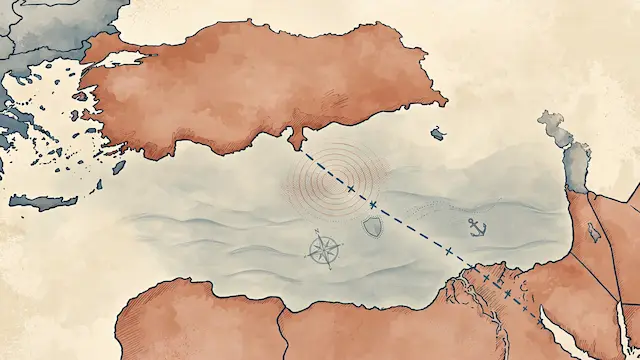
Turkey is celebrating a significant diplomatic and economic achievement following the ratification of a maritime border agreement with Libya by the eastern Libyan parliament. This deal, initially agreed upon seven years ago, solidifies Turkish influence in the region and has sparked anger and concern in Greece, Cyprus, Egypt, and Israel.
Turkish President Recep Tayyip Erdogan secured a key victory when the parliament in eastern Libya, aligned with General Khalifa Haftar, approved the 2019 maritime deal. The ratification, nearly seven years after its signing and contrary to the parliament's previous opposition, was reportedly unanimous. This development has drawn sharp criticism from Greece, Cyprus, and the European Union, who view the agreement as an infringement on their maritime rights.
The 2019 agreement between Turkey and the UN-recognized Government of National Accord in Tripoli established maritime jurisdiction zones in the Mediterranean, despite the absence of a shared land border. This demarcation grants significant economic and strategic rights, including the exploitation of natural resources like gas and oil. However, the agreed-upon border cuts through areas encompassing Greek islands such as Crete and Rhodes, which Greece argues are entitled to their own exclusive economic zones and continental shelves.
An interesting aspect of the deal's ratification is the shift in alliances. Since the fall of Gaddafi in 2011, Libya has been divided. The eastern parliament, previously at odds with Turkey and even severing political ties in 2020 after Turkey militarily supported its rivals in Tripoli, has now approved the deal. This indicates a strategic realignment by Turkey, which has been cultivating relationships with both major power centers in Libya to ensure long-term influence.
Economically, Turkey aims to secure greater access to Mediterranean energy resources, particularly potential gas and oil reserves. The deal strengthens Turkey's claims for maritime rights in areas of interest for exploration and energy cooperation, potentially benefiting Turkish companies. Politically, expanding influence to eastern Libya, in addition to its existing ties in the west, enhances Turkey's regional leverage, particularly concerning North Africa, Europe, and the Middle East, with implications for migration flows.
Greece and Cyprus are particularly incensed, viewing the deal as a direct challenge to their maritime rights and energy claims. Greece argues the agreement disregards the geographical reality of its islands and infringes on its economic rights south of Crete. The EU has reiterated its stance that the agreement violates the sovereign rights of third countries and is inconsistent with maritime law. Egypt, a supporter of Haftar's faction and holder of its own maritime agreement with Greece, finds itself in a position where its eastern Libyan allies are endorsing a deal Cairo opposes.
For Israel, while the deal does not directly alter its maritime borders or existing gas rights, it presents potential challenges. The Turkish-Libyan agreement could create further political and legal obstacles for the EastMed pipeline project, intended to transport natural gas from the Eastern Mediterranean to Europe. Additionally, Turkey's claim that some maritime surveys for the Great Sea Interconnector electricity cable project require its coordination, due to its inclusion in the Libyan deal, creates friction with Greece. The agreement also undermines two of Israel's key allies, Greece and Cyprus, amidst growing tensions with Turkey.
Mentioned


