
Libyan Parliament Backs Turkey Maritime Deal, Raising Regional Tensions
Translated & summarized from Cursorinfo by baba
Libya's eastern parliament has unanimously approved a 2019 maritime deal with Turkey, bolstering Ankara's regional influence and potentially impacting Israel's energy projects. Greece has rejected the agreement, citing violations of maritime law, while Turkey celebrates it as a victory for its maritime rights. The deal could complicate Israel's plans for energy infrastructure connections to Europe, particularly an underwater electricity cable project. This development follows a period of warming relations between Turkey and factions in eastern Libya, despite past military support for opposing sides.
The story in 6 lines · by baba
- Libya's eastern parliament unanimously approved a 2019 maritime deal with Turkey on October 20.
- The agreement strengthens Turkey's position in the eastern Mediterranean and may affect Israel's energy projects.
- Greece rejected the deal, calling it a violation of maritime law and regional sovereign rights.
- Turkey hailed the approval as a significant achievement for its maritime claims and "Blue Homeland" doctrine.
- The deal could complicate Israel's plans for an underwater electricity cable connecting to Europe.
- The decision reflects a reconciliation between Libya's rival political camps and Turkey.
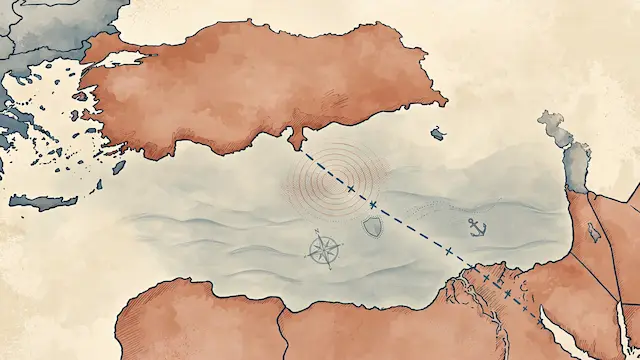
The parliament in eastern Libya has unanimously approved a 2019 maritime border agreement with Turkey, a move that strengthens Ankara's regional position and could complicate Israel's energy projects. This decision, made on Tuesday, October 20, marks an end to years of opposition from factions aligned with military commander Khalifa Haftar, securing political backing across Libya's divided political landscape. Greece has vehemently rejected the decision, while Turkey hailed it as a significant boost to its maritime rights claims in the eastern Mediterranean.
According to the Turkish news agency Anadolu, lawmakers not only approved the memorandum on delimiting maritime jurisdictions but also rescinded two prior decisions from 2020 that had rejected similar understandings with Turkey and called for severing political ties with Ankara. The votes took place in Benghazi. The agreement aims to regulate the exploration and exploitation of natural resources, including gas and oil.
Greece opposes the deal, arguing that the demarcation disregards its maritime rights related to its islands, particularly Crete, and encroaches on territories claimed by Greece and Egypt under a separate agreement. Israel also faces potential complications, as the Turkey-Libya accord could hinder its plans to connect to European energy infrastructure via Cyprus and Greece. A specific concern is the Great Sea Interconnector, an underwater electricity cable project, where Turkey claims part of the planned route falls under its jurisdiction and requires prior approval for seabed surveys.
Ankara's assertion of jurisdiction could delay projects, increase costs, and deter investors, potentially postponing Israel's energy import and export plans and increasing its reliance on foreign support. However, the agreement does not automatically grant Turkey the right to block Israeli shipping or resolve the underlying maritime border disputes.
The deal, originally signed in Istanbul on November 27, 2019, between Turkey and Libya's Government of National Accord led by Faiz al-Sarraj, covered military cooperation and maritime boundaries. The approval by the eastern Libyan parliament signifies a political reconciliation between Libya's rival camps, reportedly stemming from a thaw in relations between Ankara and Haftar's camp, despite Turkey's military support for Haftar's opponents in 2019-2020.
Greece maintains the Libyan parliament's decision lacks legal force, asserting the agreement violates maritime law and infringes on regional sovereign rights, as the coastlines of Turkey and Libya are not opposite or close enough to justify the demarcation. Turkey's Foreign Ministry, conversely, welcomed the vote, stating the agreement respects the rights and interests of both nations and aligns with international law. The dispute also impacts energy exploration, with Turkey opposing a 2020 agreement between Greece and Egypt that overlaps with the Turkish-Libyan zones.
Former Turkish admiral Cem Gürdeniz, associated with the "Blue Homeland" doctrine, called the decision a major diplomatic achievement for Turkey, a significant political and diplomatic defeat for Greece and its allies, and a failure of Athens' strategy to leverage Libya's division. He believes it strengthens Turkey's legal and political standing regarding its continental shelf claims notified to the UN in March 2020 and could influence future Turkey-Egypt maritime agreements. Gürdeniz urged Turkey to reinforce its diplomatic success with a naval presence and called for renewed seismic surveys and drilling in disputed areas, viewing the Libyan parliament's decision as a foundation for expanded Turkish maritime activity.
Mentioned


